Wednesday, January 11, 2023

        THE PRINCE IS THE VOCAL VICTIM


We all have our own unique cultural predispositions while growing up in different social and educational settings that may not gratify everyone.

With all the political correctness gone out of control and taking life out of joke, we don’t have to take joke out of our laugh (life).

We can’t go on doing the same thing forever and expect different results. Needless to say, racism existed for so long and nobody was prepared to do something about it for fear of coercions and controls by the very people performing the act.

History told us that in any royal aristocracy nobleness and prominence have always been the honored code of ethics before people.  

Now the time has come for some to speak up like Meghan, which put every partisan of the act at a shock and disbelief. Get used to it, it’s time for change! No one is feeling animosity for the racism and atrocities thoughtlessly occurred with an utter ignorance long time ago, but time to recognize the heartache that has triggered and move forward without repeating it, again, with the spirit of acknowledgement, reconciliation and ownership of entitlements.

However, as time went by, the anachronistic systems of royal protocol has eventually gave way to the new unceremonious, if any, in a different way, to deal with the new rules of new generations before our eyes. With the slave trade saga still hanging over the British Empire, it’s hard to imagine one of the ancestry’s children, Michelle Meghan Markle, joining the Royal Palace.

In case you didn’t know or abruptly deny it, history also tells us over 13 million Africans were stashed and transported in rugged ship, across the Atlantic Ocean in an agonizing condition, some died and thrown out in the ocean, as slaves during the period known as the “Slave Trade Triangle” over a span of 400 years and Britain fared part of the trade taking over three million slaves.

The time for change is really coming near you. I would like to think, I’m driving on the highway to self-realization so that I will be able to see, hear and acknowledge it’s time for change.

If anyone wants to see the agonizing of human trade, they must see 12 Years A Slave movie. This movie visualizes a precise atmosphere of 1853. It’s a powerful and serious movie that does not only teach the message of slave trade, but also reveals with a message of solitude in the midst of multitude.

With an appropriate credit bestowed to Meghan and all other greatly spirited personalities, like Martin Luther king, Jr., who are dedicated to egalitarianism and peaceful cohabitation in the world we live in.

Meghan lived as a confined vocal victim of within the maximum security to remain voiceless like the rest of them and the sympathizers are emphatically repudiating the truth and refuting the damaging criticisms they’re not used to as out of their usual day-to-day royal lives. That’s the sad truth of keeping their novelty for life where the rest of the world renounced the system of monarchism all together.

Meghan, like her enslaved African ancestors, reportedly suffered from a racial bias among the British public and the media. It was one of the reasons why Meghan and Harry decided to withdraw from their official duties just like the rest of the royal families.

Harry said in defense of his wife, “Meghan has been subjected to a wave of abuse, harassment and even racist newspaper articles. I hope that those behind these stories finally stop and instead begin thinking about the harm they have done.”

The modern-day breeds, Harry and Meghan, are deeply involved in transforming humanity voicing for racism and minority rights. Nevertheless, Meghan has returned to the roots of her family strongly advocating against inequality and bridging the social order of Britain, U.S. and the rest of the world.

We all have been following traditional & social lines of misguided or the not so favorable practices of any sorts, beliefs or many categories that our fore parents did for the same motives to integrate. Well, with changing times and thoughts, we find it hard to tolerate it now and allow as it still lingers to implicitly and systematically dishearten the very people we love, work and live with.

The truth will aggravate some to reveal prevailing anguishes like the apparent Harry and Meghan’s royal life revelations after living a literally muted existence behind the palace (iron) curtain, but the truth must be told sincerely without taking sides whether others accept as true or, status quo, reject it. That’s what exactly Harry is trying to reveal, what sort of life he and the royal family entailed, in his latest stirring but vividly lived life in his memoir book, spare. Who are we to judge and criticize when someone is telling us the life they’ve lived. We have only been shown the fascination and marvelous lives of the monarchs by abandoning all the intolerable performances and protocols. Thanks to past and present champions of injustice campaigners and all others who were courageously raising their hands to instigate changes.
We all have the pressure placed upon us over the years to conform to certain stereotypes. We don’t have to fit these stereotypes to please and succeed anymore. Our attitude must be to challenge all the stereotypes…linked to what we look like; where we come from, male or female, gay or straight, appreciating and celebrating our diversity in every way which drives innovation, having different points of views and experiences which will bring an alternative ingenuity in whatever we do.

The greatest anti-apartheid hero and philanthropist, Nelson Mandela, said, “No one is born hating another person because of the color of his skin, his background, or his religion. People must learn to hate, and if they can learn to hate, they can be taught to love, for love comes more naturally to the human heart than its opposite.”

One thing is for sure, we don’t live here forever, we should learn to live together without arms racing, hostility, killing our fellow human beings and all the deliberated immoral actions.

In the face of evil, the question in our morality is always a clear one. We can choose to be silent; we can choose to be defenders and accomplices of evil, we can choose to blindfold ourselves in the face of evil or get in the faces of evil doers or we have a choice to be damn evil to condone it or openly accept it. Thanks to all the social Medias for spreading well-intentioned awareness commentaries among our global society. One thing is imminent that what we have posted here has generated awareness in the minds of Harry and Meghan to be champions of change.

Harry and Meghan Markle were abandoned their palace life to live a simple life like that of the Buddha’s, but promised to become part time royals. It’s hard to understand why their decision is a complicated issue to no longer live on people’s payments and search for their own identity and independence before they leave this planet forever. It’s good to experience the lives of laypeople with no strings attached. What about if the UK people decided to completely abandon the system of Kingdoms in general like some other countries around the world that have done so. How complicated would that be? What are the benefits keeping a primeval novelty namesake?

The Sussex finally realized their responsibilities thanks to the social media influences to feed them with vital information and to fulfil their humanistic duties like everyone without depending on imperial livelihood.

The truth might hurt but must be told, regardless. Like all other breeds of our generation, Harry & Meghan’s love, respect, empathy, among other relationship cohesion morals is absolutely dissipated.

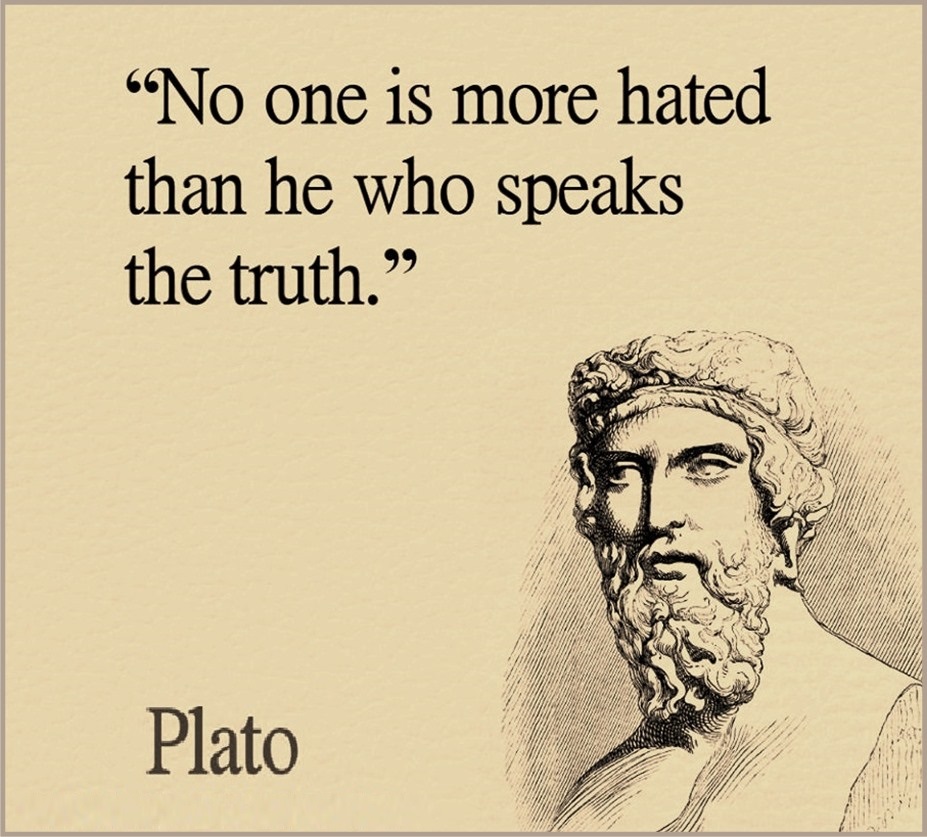
To stand for the truth, what is good and right, is the hardest choice of all because they require moral clarity and courageous acts of conscience. One must have fundamental convictions and moral principles to speak the truth and to do good and the right thing and in so doing define the moment instead of being defined by the moment & very few lingering prejudices.

“If you shut up truth and bury it under the ground, it will but grow, and gather to itself such explosive power that the day it bursts through it will blow up everything in its way.”

“I'm for truth, no matter who tells it. I'm for justice, no matter who it's for or against.”

In all conscience, truth must be told in this lifetime and/or not centuries later. If it’s not now, when?

I’m no longer afraid to speak the truth, the whole truth & nothing but the truth with humility, integrity, love & good will to all & show malevolence to nobody. The fundamental opinion of our commentary is to try to unravel the truth about the irrelevant and superfluous systems that strongly and staunchly imbedded in the human beliefs. Please, try to be mindful in understanding the purpose of the realities and refrain from bad tagging and pigeon-holing for commenting the truth about all archaic system of monarchies.

Congratulations to Harry, amid losing his equally demeaned mother at a younger age, for being brave to opening up his anguish (heart) to all of us who have lived and are living under similar circumstances and profoundly standing up for his wife stalwartly.

Read more other reflections on leaders, royalties, different business bogusness & immoral dealings time immemorial: https://timeforchangesociety.blogspot.com/2019/08/who-can-we-trust.html 

Thursday, May 26, 2022

STOP THE BLAME GAME & CONTRIBUTE TO THE CHANGE

                                Dr. Abiy Ahmed, Prime Minister of Ethiopia

 “Hate is too great a burden to bear.” –Dr. Martin Luther King, Jr., from his speech, “Where Do We Go From Here”

Again, like most of my commentaries to refresh our thoughts, our pursuit of peace, happiness and freedom appropriate with the current situations at Home and in the diaspora communities, I can’t help but make some opinions on the constant backstabbing of the popularly elected president who is serving our people without taking racially motivated bickering sides. It’s become customary that every time someone is jailed, we tend to blame the leader if he is not from the same racial background.

Prime Minister Abiy repeatedly announced that if anyone from any ethnic group causes any havoc to the public and seem to be committing crime out of the ordinary, he or she will be punished legally.

What we see at the moment is untenable scenario repeating itself, accusing the Prime Minister for jailing trouble makers from different racial background than his. We may not use to complying with this sort of laws because of the long existed favoritism by the governing racial groups. This sort of injustice is no longer serving our people and now it’s affirmed that everyone is equal under the law. So, let’s give the prime minister to do his job unconditionally, serving everyone equally.

Because of all the ethnic based disturbances and making unnecessary comments to disqualify the prime minister for his wonderful work being nominated by foreign presses like the Time Magazine’s “100 most influential people of 2022”. If we recall, in 2019, the current Ethiopian president, H.E. Ms. Sahle-Work Zewde, was also one of the “100 most influential African womenof 2019”. So was Abiy Ahmed being included in the 2019 listings as well.

                          H.E. Ms Sahle-Work Zewde, President of Ethiopia

The recent reelection of Dr. Tedros Adhanom Ghebreyesus, as the World Health Organization (WHO) Director-General in 2022, again, for the second time after being elected in May of 2017, is also commendable and we should be proud for the one in a million foreign press acknowledgements that usually don’t favor to praise Afrikans. Regardless of Tedros’s racial leanings toward his ethnic background, like all other racially motivated insurgents who try to support their ethnic groups to prevail, without racial profiling, he is still listed as an Ethiopian, Afrikan and should be honored and congratulated.

“The secret of change is to focus all of your energy, not on fighting the old, but on building the new.”–Socrates.

Dr. Tedros Adhanom Ghebreyesus, Director-General of World Health Organization (WHO)

How ironic is that, we tend to take our own illustrious leaders for granted, others tend to appreciate them wholeheartedly. We must try to change by thinking in an innovative approach.

We seem to throw stones at each other from far away physically hitting no one but emotionally bruising everyone, in doing so with no clear evidences or offering solutions to criticisms to any comments being made by those contributing an alternative opinion to solve the ongoing problem. 

This is just my observation of our academics’ explanations online, instead of rebutting with evidences in a respectable manner customary to our culture on any remarks, throwing condemnations based on emotions leaving the subject matter unresolved. I don’t want to give examples of those articles or issues as it serves no purpose but create divisions. You will know next time you read some of the begetting of these commentaries online.

We’ve tried everything to transform our country and nothing seemed to work. You know what, the ‘time is up’ and the only way is U-N-I-T-Y without complaining pointlessly, competing recklessly, comparing enviously, criticizing unreasonably by name calling and shaming hatefully for mistakes of the past.

It seems our ego (sense of self) has taken over our conscience. It’s shame that we simply don’t acknowledge or appreciate anything because that seemed threatening to our intellectual territory. This shame can lead us to deny or reject the simplest act of sharing, gratitude and validation of somebody else’s thoughtful concepts.

When we let our ego convince us that we have done no wrong and instead of repent begin to justify our actions, then we have chosen a state of denial over truth, flesh over Spirit. If we consciously war against our conscience, refuse to repent, ask for forgiveness and doing the right thing, choosing rather to justify our actions by whatever theory we can come up with allowing our ego defeat our conscience.

We might choose to go to war with our morality and reassure ourselves with our ego by saying… it was not my fault, I was born this way, it is genetic, my father or mother was this way, I was abused as a child, God made me to act this way…, it is a way of life – all men or women do this –everybody is doing it and so forth.

The list of excuses we might come up with abounds, every time we justify our sinful actions for self-glorification, it seems our ruthless ego (opinion of ourselves) has defeated our humane conscience to value somebody else’s good thoughts.

Don’t get me wrong, you probably have seen it or sensed this action was taking place and there is nothing negative about telling the truth, “nothing but the truth”, rather than pretend and act as everything is hunky-dory.

We have all changed in some way or another and seen some of those changes either for good or otherwise, helping us or affecting our interactions since the opening of information exchanges in a multitude of social media outlets.

I, for one, certainly, have noticed how the interactions motivated some of my friends and the social media users to reinvent themselves unlike others who have been overwhelmed by the wave of changes in methodological networking or communications and apparently withdrew indefinitely or coyly remaining as a silent passenger or unable to make their comments.

Remember, we may not have the prestige of celebrities, the power of Pope or all other academic luminaries, but our differences of opinion and stories are unique and equally valued, effective and say something no one has expressed before and will reinforce others talents.

Thumbs up and hats off to those of you for being resilient to care and share to disseminate what will be pivotal information for everyone and also send my hearty message to those coyly pals to absorb all as much as they can and put out their valued side of story. All we need is to improvise our thoughts to change.

Read more similar commentaries at: http://timeforchangesociety.blogspot.com.au

Tuesday, August 31, 2021

THE EPIDEMICS OF LOCKDOWN

 LOCKDOWN IS KILLING US, WHO CAN WE TELL?

The pandemic virus has brought the worst of human fallibility when dealing with each other and loved ones. It’s very disheartening to see families die without seeing their loved ones because of the lockdowns and strict admission restrictions.
There’s no doubt that everybody wants standard adjustments and the lockdown to go. The so-called slogan of “STAYING APART KEEPS US TOGETHER”, "GET VACCINATED"... seemed good idea at the time, but ultimately, attested futile and curved into a morbid impression that troubled people’s emotional states. People’s lives have been grief-stricken and colossally changed forever by the lockdown far more than the epidemic virus. Businesses collapsed, jobs diminished, families fragmented, the effects of mental illness is becoming intolerable and the freedom of living our lives to the fullest has been compromised. Like flu or any other ailments, the virus is here to linger on for some time and we can’t keep padlocking our lives forever.
Every Australian state's Premiers have been very authoritative and dictatorial in dealing with other leading bureaucrats and restricting Australian citizens to travel to and from each state without requiring entry visas (almost). It’s hard to tell who is leading the country as the states have their own leaders and very reticent to take orders and work with the country’s officially and federally elected leaders. It’s puzzling at times to identify who is in charge of Australia.
It’s time that we should get out of our business as usual comfort periods of complacency and open to changes and restrictions that are taking place permissible to save our lives.
The law enforcing authorities, generally, the police must not exercise their power to intimidate people to issue unthinkable fines at first contact and should give strict warnings to be fined if they repeat the offences.
The rules imposed were unfair, inconsistent and confusing while sporting teams, their swags and families are able to travel interstates, tested and vaccinated people have been restricted from going back to their homes after visiting other states, banned to visit their dying families while the rich and famous allowed quarantining prior to visits.
What’s the purpose of vaccination and screening people for virus free if they’re not free to meet or see their families and even other people? This system, deceptively, may appear to limit the spread of the virus, but with this here to stay virus tormenting society more than any other endemic disease, distressing businesses and some closing down, an extensive rise of mental illnesses, public isolations as we’ve never seen before even if the condition considered harmless, will continue to distress us unless other ways of preventative technique is executed.
Instead of isolating the person and lockdown the region that was detected with the virus, locking down the entire country, state, city and the rest of unaffected suburbs is an absolutely dumb founded approach and a reckless method.
Authorities, always, must use commonsense and detailed preferences in their stride before abusing their power and issuing fines to the already financially and socially anguished/deprived and isolated individuals by the epidemic virus.
We don’t want to repeat what we already know, but call for public responsiveness to change existence back to normal as people should be able to take responsibility for their own lives.
Let’s all respect the law and each other and live up to our potentials, because we’re all together in this frenzied time and we’ll come thru this only if we march together, unfortunately not in isolation.

Tuesday, January 5, 2021

AFRICAN UNITY MUST ENCOURAGE AND DO MORE. MUST NOT OPERATE BUSINESS AS USUAL

The ‘colonizers’ did not recognise that African culture had its own wisdom, insights and values that informed the lives of Africans. Thus, the missionaries approach to Christianise Africans was based on coercion. They required Africans to renounce everything related to their religious beliefs to be a ‘proper’ one–Christian. It is repeatedly being told that Africa is growing and prospering and has become the fastest growing economy. The change in the global narrative about Africa previously deemed as the Dark Continent may be soothing to some minds, but it is simply not true. Africa is already the most conflict ridden continent and contrary to what many may say, it is not the fastest growing economy and it is not prospering but remains to be the poorest continent and its people are displaced. The continent continues to suffer under very rapid urban growth accompanied by massive urban poverty and many other social problems. This kind of tragic situation accompanied by oppression injustice and inequality lead people to take extreme measures. African leaders have to understand that an inclusive and transparent system and a fair distribution of resources is the only way to prevent conflict and fight terror of whatever form and allow their countries to prosper in the real sense. Africa must educate, train, find ways to resolve the ongoing grievances of the past where the status quo is unsustainable and must start by rebuilding ethics-based models for leadership within the countries governments, institutions, civil society and social structures. As Obama time after time stated in several of his deliveries, “change takes time”, it’s time for us to take responsibility for our own predicaments. Obama clearly told African leaders on the future of Africans: “We must start from the simple premise that Africa’s future is up to Africans. I say this knowing full well the tragic past that has sometimes haunted this part of the world. I have the blood of Africa within me, and my family’s own story encompasses both the tragedies and triumphs of the larger African story. …” “Development depends upon good governance. That is the ingredient which has been missing in far too many places, for far too long. That is the change that can unlock Africa’s potential. And that is a responsibility that can only be met by Africans. … “Africa doesn’t need strongmen, it needs strong institutions….” Africans must begin to trade with its African Union member countries and other developing neighbours. The recent G20 summit 2020 is made up of 19 countries and the European Union will convene from 21-22 November 2020, in Riyadh, Saudi Arabia. The meeting is overshadowed by the leaders of the free world’s 20 wealthiest leaders. The premier forum being for international economic cooperation and increasingly the central opportunity for all questions of global governance, only one country, South Africa, was there representing the whole African nations. Although, it’s a symbolic photo opportunity for the rest of attendees, the decisions will most likely be made by, business as usual, the domineering four or five powerful diplomatically astute countries. Don’t exactly know the selection’s criteria or the qualifications to attend the summit, but the country with headquarters of the African Union, Ethiopia, decently a black nation, is more deserved to represent the African nations than South Africa, if not at least two or three countries should have been invited from the continent. We hope the summit will be looking forward to future successful meetings with more inclusions of thoughts from invited leaders of developing countries, not just invitations to take photos together, with opinions considered. My message to all Africans, make no mistake, those days of until death do us part is over and look no further than the transformation of Ethiopia led by one of the new generations of brilliant and reformist young leaders, Prime Minister, Dr. Abiy Ahmed. What we can do now is a change that course of exploration, annihilation, domination or association, or whatever you want to call it, with sincere appreciation and reconciliation to transform everything to create New Africa. LONG LIVE AFRICA.

Thursday, May 14, 2020

NEW ETHIOPIA’S TIMELINE

Ethiopia, one of the East African countries
This is a brief but concise history of the new Ethiopia, East Africa, aka Horn of Africa, elucidating how far we’ve come thru all against odds, what progresses we’ve made, what more we need to do to transform our country and few more important recommendations to share. The timeline is a four part documentary on history and the successive rulers, the origin of the Nile River which runs thru Sudan picking up all the goodies on its way winding up in Egypt giving everything gathered on its pathway, the origin of Koffee, and finally the amazing discovery of humankind, “Dinknesh” in Ethiopia.

THE EVOLUTION OF THE NEW ETHIOPIA

ZAGWE DYNASTY*

The Zagwe dynasty was the ruling dynasty of a medieval kingdom in the northern part of Ethiopia. The Kingdom, centred in Lalibela, ruled large parts of the territory from approximately 900 to 1270, when the last Zagwe King was killed in a battle by the forces of the Abyssinian King, Yekuno Amlak. The name of the dynasty is thought to derive from the ancient Ge’ez phrase Ze-Agaw, meaning “opponent”, in reference to the Mara Tekle Hymanote, the founder of the dynasty. Zagwe’s best-known King was Gebre Mesqel Lalibela, who is credited with having constructed the rock-hewn monolithic churches of Lalibela.

ZEMENE MESAFINT*

The Zemene Mesafint, variously translated “Era of Judges”, “Era of the Princes”, “Age of Princes”, etc.; was a period in Ethiopian history between the mid18th and mid19th centuries when the country was de facto divided within itself into several regions with no effective central authority. It was a period in which the Emperors from the Solomonic dynasty were reduced to little more than figureheads confined to the capital city of Gondar.

The most powerful lords during the Zemene Mesafint were of the Yejju tribe of the Oromo people and were Ras Ali I, Ras Ali II, Ras Aligaz, Ras Wolde Selassie and Ras Gugsa. These were collectively called the rulers (ወራሽ፡ Werash). Other regional lords included Ras Hailu Y., Dejaz. Wube Hailemariam and King Sahle Selassie of Shewa. However, the Yejju lords did have predominance or hegemony over the other lords of Ethiopia.

DYNASTY*

TEWODROS II
Emperor Tewodros II

Tewodros II was Emperor of Ethiopia from 1855 until his death in 1868. He was born Kassa Hailegiorgis. His rule is often placed as the beginning of modern Ethiopia, ending the decentralized Zemene Mesafint (Era of the Princes).

Tewodros II’s origins were in the Era of the Princes, but his ambitions were not those of the regional nobility. He sought to re-establish a cohesive Ethiopian state and to reform its administration and church. He sought to restore Solomonic hegemony, and he considered himself the Elect of God.

Tewodros faced constant rebellions in other provinces. Without fulfilling his dreams, he eventually committed suicide at the Battle of Meqdala refusing to be caught by the British Expedition army.
Emperor Tewodros II killed himself and found dead by the British soldiers.
MENELIK II
EMPEROR MENELIK II
Menelik II was Emperor of Ethiopia from 1889 to his death in 1913 and King of Shewa from 1866 to 1889. At the height of his internal power and external prestige, the process of territorial expansion and creation of the modern empire state was completed by 1898. Menelik is also remembered for leading Ethiopian troops against the Kingdom of Italy in the First Italo-Ethiopian War in March 1, 1896, where Menelik scored a decisive victory at the Battle of Adwa. Read more: https://timeforchangesociety.blogspot.com.au/2017/03/battle-of-adwa-menelik-ii.html
Emperor Menelik II plotted the brutal campaigns that would consolidate all of what is now Ethiopia under his rule and from the grand palace he had constructed on the hill overlooking the city 130 years ago.


TAITU BETUL*


EMPRESS TAITU & MENELIK II

Taitu Betul was born in Debretabor, Ethiopia, in 1840 or c. 1851 – 11 February 1918. Her father, Ras Betul Haile Mariam, was from Yeju and Gonder. Her mother, Yewubdar, was from Gojam, a northern provinces in Ethiopia.Taitu had four siblings, two brothers and two sisters, and was the third-born of the family. Her childhood was short, as she soon had to prepare to become a woman at the age of 10, when she would be married off to her first husband, an officer of Emperor Tewedros. In her fourth and final marriage, Taitu Betul married King Menelek of Shewa who later became Emperor Menelek II of Ethiopia.

Taitu Betul became an Empress of the Ethiopian Empire 1889–1913. She was the third wife of Emperor Menelek II of Ethiopia and she was known changing the name of Ethiopia’s capital city from Finfinne to Addis Ababa.

Empress Taitu held a hard line against the Italians and when talks eventually broke down Italy invaded the Empire from its Eritrean colony and she marched north with Emperor Menelik II and the Imperial Army, commanding a force of cannoneers at the historic Battle of Adwa that resulted in a humiliating defeat for Italy in March 1, 1896. This victory was the most significant of any African army battling European colonialism.

Some believe Taitu may have played a part in replacing Emperor Iyasu V in 1916 with Empress Zawditu, Menelik II’s daughter by yet another previous marriage who has always been close to Empress Taitu, her father’s 3rd wife. Taitu lives to this day in memories as the Empress who won liberty against the colonizers.

ZEWDITU*

Empress Zewditu

Empress Zewditu was the eldest daughter of Emperor Menelik II. Her mother, Weiziro (Lady) Abechi, was a noblewoman of Wollo and a brief companion of Menelek. Her mother had separated from Menelik when Zewditu was very young and the future empress was raised by her father, Emperor Menelik, later married Taitu Betul and had no children from her.

Zewditu born, Askala Mariam, 29 April 1876 – 2 April 1930, was Empress of Ethiopia from 1916 to 1930. The first female head of an internationally recognized country in Africa in the 19th and 20th centuries and the first empress regnant of the Ethiopian Empire, her reign was noted for the reforms of her Regent and designated heir Ras Tafari Makonnen who succeeded her as Emperor Haile Selassie I, about which she was at best ambivalent and often stridently opposed, due to her staunch conservatism and strong religious devotion. As of 2020 she is the most recent empress regnant in history. An empress regnant is a female monarch, equivalent in rank to a king, who reigns in her own right, as opposed to a queen consort, who is the wife of a reigning king, or a queen regent, who is the guardian of a child monarch and reigns temporarily in the child's stead. An empress regnant is a female monarch who reigns in her own right over an empire.

Many changes were made during the reign of Haile Selassie toward the modernization of Ethiopia upon his accession as Emperor on November 2, 1930, as well as before, beginning from the time he effectively controlled Ethiopia in 1916 as Regent Plenipotentiary, Ras Tafari.

Until the end of the Ethiopian monarchy in 1974, there were two categories of nobility in Ethiopia. The Mesafint, the hereditary nobility, formed the upper echelon of the ruling class. The Mekwanint were the appointed nobles, often of humble birth, who formed the bulk of the aristocracy. Until the 20th century, the most powerful people at court were generally members of the Mekwanint appointed by the monarch, while regionally, the Mesafint enjoyed greater influence and power. Emperor Haile Selassie greatly curtailed the power of the Mesafint to the benefit of the Mekwanint, who by then were essentially coterminous with the Ethiopian government and the Ethiopian aristocratic court titles.

Haile Selassie I, born Lij Tafari Makonnen, 23 July 1892 – 27 August 1975), was a crown prince and regent of the Ethiopian Empire from 1916 to 1928 and then king and regent from 1928 to 1930 and finally Emperor from 1930 to 1974. He is renowned, a defining figure in modern Ethiopian history and was a member of the Solomonic dynasty who traced his lineage to Emperor Menelik I.

HAILE SELASSIE I

HER Empress Menen Asfaw and HIM Haile Selassie I
Haile Selassie I was born Lij Tafari Makonnen on 23 July, 1892 and died on 27 August, 1975. He was a crown prince and regent of the Ethiopian Empire from 1916 to 1928 and then king and regent from 1928 to 1930 and finally Emperor from 1930 to 1974. He was a defining figure in modern Ethiopian history and was a member of the Solomonic dynasty who traced his lineage to Emperor Menelik I. 

See video of HIM, 25th anniversary of the coronation.
Haile Selassie I was married to Empress Menen Asfaw, the daughter of Asfaw, Jantirar of Ambassel and her mother, Woizero Sehin Michael, the daughter of King Mikael of Wollo and her uncle was Emperor Iyasu V (Lij Iyasu).

King Mikael of Wollo, born Ras Mohammed Ali, was an army commander and a member of the aristocracy of the Ethiopian Empire. He was the father of the uncrowned Emperor Iyasu V. He changed his name to Mikael upon converting to Christianity.

Empress Menen Asfaw, her christening name Welette Giyorgis, born born in Ambassel, April 3, 1891 and died February 15, 1962, was Emperor Haile Selassie’s wife and the Empress Consort of the Ethiopian Empire.
Haile Selassie’s internationalist views led to Ethiopia becoming a charter member of the United Nations. At the League of Nations in 1936, he condemned Italy’s use of chemical weapons against his people during the Second Italo-Ethiopian War which was fought between Italy and Ethiopia from October 1935 to February 1937. 
It is seen as an example of the expansionist policy that characterized the Axis powers and the inefficiency of the League of Nations before the outbreak of World War II. 
See the video of Italian expansionist dogma that cost lives on both sides.
HIM speaking to the League of Nations Meeting
The Kingdom of Italy began its attempts to establish colonies in the Horn of Africa in the 1880s. The first war of this colonial expansion concluded with the disastrous First Italo-Ethiopian War and the defeat of the Italian forces in the battle of Adwa, on 1 March 1896, inflicted by the Ethiopian army of Emperor Menelik II.
Haile Selassie I has been criticized by some historians for his suppression of rebellions among the landed aristocracy (the mesafint), which consistently opposed his reforms; some critics have also criticized Ethiopia's failure to modernize rapidly enough. During his rule the Harari people were persecuted and many left the Harari Region. His regime was also criticized by human rights groups, such as Human Rights Watch, as autocratic and illiberal. The 1973 famine in Ethiopia led to Selassie’s removal from the throne.

Read more academic studies summaries on HIM here: https://adst.org/2015/10/the-last-emperor-the-fall-of-haile-selassie/ 
Haile Selassie I telling the takeover Military Regime that he accepts the change.
Finally, Emperor Haile Selassie was overthrown, imprisoned and forced to renounce the Royalty in September 12, 1974 by the Ethiopian provisional military government and died on August 27, 1975, while his personal physician was absent. It is commonly believed that Mengistu killed him, either ordering it done or by his own hand.
PROVISIONAL MILITARY GOVERNMENT (DERG)*
The Derg (committee) is officially the Provisional Military Government of Socialist Ethiopia (in Amharic: የኅብረተሰብአዊት ኢትዮጵያ ጊዜያዊ ወታደራዊ መንግሥት), was a Marxist-Leninist military junta that ruled Ethiopia from 1974 to 1987.
Mengistu left, Aman Andom center and Teferi Benti right
The Derg was established in June 1974 as the Coordinating Committee of the Armed Forces, Police and Territorial Army, by low-ranking officers of the Ethiopian Army and police led by Chairman Aman Andom. The Derg was formally renamed the Provisional Military Administrative Council and in September 1974 overthrew the government of the Ethiopian Empire and Emperor Haile Selassie during mass protests.
The Derg abolished the monarchy and embraced communism as an ideology, establishing Ethiopia as a Marxist-Leninist one-party state with itself as the vanguard party in a provisional government. The abolition of feudalism, increased literacy, nationalization, and sweeping land reform including the resettlement and villagization from the Ethiopian Highlands became priorities.
 In September 15, 1974, the committee renamed itself as the Provisional Military Administrative Council (PMAC) and took control of the government. The Derg chose Lieutenant General Aman Andom, a popular military leader and a UK, Sandhurst, graduate to be its chairman and acting head of state. 
AMAN ANDOM

General Aman Andom
However, General Aman Andom quarreled with the radical elements in the Derg over the issue of a new military offensive in Eritrea, being an Eritrean did not help his stand, and the Derg’s proposal to execute the high officials of Selassie’s former government. After eliminating units loyal to him, the Engineers, the Imperial Bodyguard and the Air Force, the Derg removed General Aman from power and executed him on November 23, 1974, along with some supporters and 60 officials of the previous Imperial government (see table).
Brigadier General Tafari Benti became both the new Chairman of Derg and head of state, with Mengistu and Atnafu Abate as his two vice-Chairmen, both with promotions to the rank of Lieutenant-Colonels. It’s been a cat and mouse ground looking for power.


TAFARI BENTI
Brigadier General Tafari Benti
Mengistu Haile Mariam became Chairman in 1977, launching the Red Terror (Qey Shibir) to eliminate political opponents, with tens of thousands imprisoned and executed, including more people taken on streets, without trial (see table).
In 1987, Mengistu abolished the Derg and formed the People’s Democratic Republic of Ethiopia (PDRE) led by the Workers’ Party of Ethiopia, with a new government dominated by surviving members of the Derg. The committee elected Mengistu Haile Mariam as its chairman and Atnafu Abate as its vice-chairman.


         Mengistu Hailemariam                                                                                                                                       Atnafu Abate                      
The Massacre of the Sixty, or as called Black Saturday, took place in Addis Ababa on the morning of 23 November 1974, (Ethiopian calendar: 14 Hidar 1967), 60 imprisoned former government officials were executed by the Derg at Kerchele Prison, commonly called “Alem Bekagn” (Farewell to the World), in Akaki Ethiopia’s central prison until 2004.
Ethiopia’s revolution started about ten weeks before the massacre. Before this point, Derg was able to instill hope among the people, that the revolution could remain bloodless. Epitomised by the slogan (Yale minim dem, Ityopiya tikdem), (Let Ethiopia progress, without any bloodshed).
The massacre presaged the Red Terror and Ethiopian civil war that would follow in years after.
However, Mengistu executed most of the educated officials, families of the royals and other public dignitaries in fear of not staying in power for so long, if they’re to be freed.
Other ordinary peace loving Ethiopians were also killed during Red Terror rule. Read at the following website in memory of those who gave it all for free and democratic Ethiopia. http://assimba.org/Memorial/index.html

Mengistu Haile Mariam ordered the execution of the following 54 people and the remaining 6 who were killed in a refusal shootout at the home of General Aman Andom, including him (see table).
See also the video of the fateful night of November where the 60 senior officials were abruptly executed.


No.
ALL EXECUTED OFFICIALS & 6 KILLED IN SHOOTOUT 
1
PM Lilj Endalkachew Makonnen
31
Captain Mola Wakene
2
PM Tsehafi Teezaz Aklilu Habte-Wold
32
Captain Wolde-Yohannes Zergaw
3
Lt. General Abiye Abebe
33
Lieutenant Belai Tsegaye
4
H.H. Prince Leul Ras Asrate Kassa
34
Ato Nebiye Leul Kifle
5
Rear Admiral Leul Iskinder Desta
35
Ato Solomon Gebre Mariam
6
Ras Mesfin Sileshi
36
Ato Tegegn Yetashework
7
Ato Abebe Retta, Minister
37
Afe Nigus Abeje Debalke
8
Ato Akalework Habte-Wold
38
Dejazmatch Kebede Aliwele Asfaw
9
Lt. Colonel Tamirat Yigezu
39
Major General Gashaw Kebede
10
Dejazmatch Kifle Irgetu
40
Major General Seyoum Gedle Giorgis
11
Lt. General Kebede Gebre
41
Major General Tafesse Lemma
12
Lt. General Issayas Gebre-Sellasie
42

13
Lt. General Assefa Ayana
43
Fitawrari Amde Abera
14
Lt. General Debebe HaileMariam
44
Fitawrari Tadesse Enko Selassie
15
Lt. General Belete Abebe
45
Fitawrari Demisse Alamirew
16
Lt. General Deresae Dubale
46
Kegnyazmatch Yilma Aboye
17
Lt. General Haile Baikedagn
47
Brigadier General Wondemu Abebe
18
Lt. General Assefa Demisse
48
Brigadier General Girma Yohannes
19
Lt. General Yilma Shibeshi
49
Brigadier General Mulugeta Wolde Yohannes
20
Ato Mulatu Debebe
50
Colonel Yigezu Yimene
21
Dr. Tesfaye Gebre Igzi
51
Colonel Alem Zewde Tessema
22
Dejazmatch Workineh Wolde Amanuel
52
Colonel Tassew Mojo
23
Dejazmatch Aemero Selassie Abebe
53
Major Berhane Mecha
24
Lt. General Abebe Gemeda


25
Dejazmatch Sahelu Difeye
1
Lieutenant Demisse Shiferaw
26
Dejazmatch Worku Enko Selassie
2
Lance Corporal Bekele Wolde Giorgis
27
Dejazmatch Legese Bezu
3
Sub-Corporal Tekle Haile
28
Colonel Solomon Kedir
4
Lt. General Aman Mikael Andom
29
Blata Admasu Retta
5
Lance Corporal Tesfaye Tekle
30
Dejazmatch Solomon Abreha
6
Junior Aircraftsman Yohannes Fetoui


The monarchy was formally abolished in March 1975. Emperor Haile Selassie died on 22 August 1975, while his personal physician was absent. It is commonly believed that Mengistu killed him, either ordering it done or by his own hand.

During the red terror, 1975-77, after internal conflicts that resulted in the execution of General Tafari Benti and several of his supporters in February 1977 and the execution of Colonel Atnafu Abate in November 1977, Mengistu gained undisputed leadership of the Derg. In 1987, he formally dissolved the Derg and established the country as the People’ss Democratic Republic of Ethiopia (PDRE) under a new constitution.
Derg members Mengistu Haile Mariam, Aman Mikael Andom and Atnafu Abate
Mengistu became Secretary General of the Workers’ Party of Ethiopia (WPE) and President of the PDRE, while remaining Commander in Chief of the Armed Forces.
The famine in the mid-1980s brought the political situation in Ethiopia to the attention of the world and inspired charitable drives in Western nations, notably by Oxfam and the Live Aid concerts of July 1985.
In September 1987, the new government was fully in place and the Derg formally abolished and the surviving members of the Derg including Mengistu, but he remained in power as the leaders of the new civilian regime.


MENGISTU HAILEMARIAM
President Mengistu Hailemariam
Towards the end of January 1991, a coalition of rebel forces, the Ethiopian People’s Revolutionary Democratic Front (EPRDF) captured Gondar (the ancient capital city), Bahir Dar and Dessie. Meanwhile, the Eritrean People’s Liberation Front had gained control of all of Eritrea except for Asmara and Assab.
As the Soviet Union stopped aiding the Mengistu regime altogether in December 1990, his doom became imminent and Mengistu alternated between vowing resistance to the end and hinting that he might follow Emperor Tewodros’s example and commit suicide as his actions were frantic.
On 21 May, claiming that he was going to inspect troops at a base in southern Ethiopia, Mengistu slipped out of the country to Kenya. From there he flew with his immediate family to Republic of Zimbabwe, where he was granted asylum and, as of 2017, still resides.

MELESE ZENAWI
Melese Zenawi became the next leader of Ethiopia
The Ethiopian People’s Revolutionary Democratic Front (EPRDF) immediately disbanded the Workers’ Party of Ethiopia (WPE) and arrested almost all of the prominent Derg officials shortly after they entered Addis Ababa.

After the overthrow of the Derg’s military government, he became president of the transitional government and later prime minister. During his tenure, Ethiopia became one of Africa’s fastest-growing economies.

In December 2006, seventy-three officials of Derg were tried and found guilty of genocide including Mengistu in absentia.
After leading the Ethiopian People’s Revolutionary Democratic Front (EPRDF) to victory in the Ethiopian Civil War, Meles Zenawi, born in Adwa, May 9, 1955 and died in August 20, 2012, served as President of the Transitional Government of Ethiopia from 1991 to 1995 then as the Prime Minister of Ethiopia from 1995 to his death. From 1989, he was the chairman of the Tigray People’s Liberation Front (TPLF) and the head of the EPRDF since its formation in 1991. Melese left Haile Selassie I University in 1975 to join the TPLF and fight against the Derg, the Mengistu Haile Mariam led military dictatorship in Ethiopia.  He was dubbed the founder of federalism of modern Ethiopia.


HAILEMARIAM DESALEGN
Hailemariam Desalegn became the next Prime Minister After the death of Melese
Hailemariam Desalegn, born July 19, 1965, served as Prime Minister of Ethiopia after the sudden death of Melese Zenawi in 2012 to April 2, 2018. He also previously served as Deputy Prime Minister and Minister of Foreign Affairs under Prime Minister Meles Zenawi from 2010 to 2012. After Meles’ death in August 2012, Hailemariam succeeded him as Prime Minister, initially in an acting capacity. He was then elected as the Chair of the Ethiopian People’s Revolutionary Democratic Front (EPRDF), the ruling party, on September 15, 2012.
He submitted his resignation as Prime Minister of Ethiopia and EPRDF chairperson on February 15, 2018 in response to the fallout from mass protests and unrest in 2016. His resignation was accepted on March 11, 2018, but he stayed in office as caretaker Prime Minister until April 2, 2018. He is the first ruler in modern Ethiopian history to resign without bloodshed and tears. Following the resignation, Abiy Ahmed, a former army intelligence officer, has accepted the transfer of power from the outgoing Prime Minister, Hailemariam Desalegn, who was replaced to serve the country after the abrupt death of Prime Minister Meles Zenawi in 2012.
ABIY AHMED 
The unexpected appointee as Ethiopian Prime Minister
Abiy Ahmed Ali, born in Agaro, August 15, 1976, became Prime Minister of Ethiopia since April2, 2018. He is the first Oromo chairman of the ruling Ethiopian People’s Revolutionary Democratic Front (EPRDF) from the Oromo Democratic Party (ODP), which is one of the four coalition parties of the EPRDF. Abiy is also an elected member of the Ethiopian parliament and a member of the ODP and EPRDF executive committees.
Since becoming prime minister, Abiy has launched a wide range of programmes of political and economic reforms and worked to broker peace deals in Eritrea, South Sudan and a transition agreement in the Republic of the Sudan. Abiy was awarded the 2019 Nobel Peace Prize for his work in ending the 20 year post war territorial stalemate between Ethiopia and its former region Eritrea.
The reformer, Ethiopian Prime Minister, Abiy Ahmed and Eritrean President Isaias Afewerki during a peace pact between our old region/foe, Eritrea.
Prime Minister, Abiy Ahmed, finds himself in the tarnished Imperial Palace that has been through a torrent history layered with political conspiracy where successive governments ruled from the same palace, orchestrating much of Ethiopia’s tragic history from within its walls. Menelik II’s basement refrigerator rooms were labelled into torture dungeons during coup d'état.
After over a century, the Imperial Palace in the capital has been opened up after restoration on a part of the land for the general public’s viewing. The 40-acre estate palace was built by King Menelik II more than 100 years ago as home of the royal family.
Naional Jublee Palace
The National Palace is in Addis Ababa and also known as the Jubilee Palace was built in 1955 to mark the Silver Jubilee of His Imperial Majesty Emperor Haile Selassie. This is currently changed to public exhibition and named ‘Unity Park’ for public amusement by the new Prime Minister, Abiy Ahmed.

The presidency was created in its original form by the 1987 Constitution, which established the People’s Democratic Republic of Ethiopia under Mengistu Haile Mariam. He was elected to a five-year term by the National Shengo (legislature), with no term limits.


A SIGNIFICANT CHANGE

One of the momentous sign was the appointment of the first woman President, Sahle-Work Zewde, the position that was first created in 1987, to lead the country. Our gratitude also goes to all the previous Presidents and the masterminds of these changes.

Sahle-Work Zewde was born in Addis Ababa, February 21, 1950 and the first woman to hold the highest office in the land.

Sahle-Work Zewde, President of the Federal Democratic Republic of Ethiopia (FDRE)
Sahle-Work Zewde is the fourth nominated president since the ruling Ethiopian People’s Revolutionary Democratic Front (EPRDF) coalition was elected in the newly established Federal Democratic Republic of Ethiopia (FDRE) in 1995.
The President of the Federal Democratic Republic of Ethiopia is the head of state of Ethiopia and elected in a joint session of the House of Peoples’ Representatives and the House of the Federation by a two-thirds majority. She was a career diplomat, elected President unanimously by the House of Peoples’ Representatives for six years with a two term limit on 25 October 2018.
However, the position is largely a ceremonial one with executive power vested in the Prime Minister. 
Women in African Cabinets
Sahle-Work Zewde was previously Special Representative of United Nations Secretary-General António Guterres to the African Union and Head of the United Nations Office to the African Union at the level of Undersecretary General of the United Nations.
In December 2019, Sahle-Work was named the 93rd most powerful woman in the world by Forbes and the highest-ranking African woman on the list.
Ethiopia is changing rapidly under Prime Minister Abiy Ahmed, rewarding women’s contributions to the nation’s progress, with women now wielding enormous power in a country where they have mostly been confined to traditional roles.
In a cabinet reshuffle, Abiy cut the number of ministries from 28 to 20 and named 10 women among the new appointees. Women will now run key dockets including defense, trade, transport, and the newly-established ministry of peace that will tackle the wave of ethnic violence that has swept the country.
Among the women are Meaza Ashenafi, Chief Justice, Aisha Mohammed Musa, new defense minister, is the first woman to hold that position, Muferiat Kamil, former House speaker, will lead the new Ministry of Peace that will oversee the powerful National Intelligence and Security Service, the Information Network Security Agency, the Federal Police Commission and the Finance Security and Information Center.
Gender Disparities in ETHIOPIA
Wow, that’s a big achievement in a country that has long been considered patriarchal society.
Abiy said the move was meant to “show respect” to the women’s participation in nation building and to “disprove the adage that women can’t lead.” a record 50% female representation is a win for the new premier who has undertaken strategic sweeping changes and fundamental reforms in a male dominated society, both domestically and externally, since coming to power in April 2, 2108.
APOLOGIES
These transformational changes demand dedications and sacrifices. We can’t list all the people who have struggled for these changes in the 1950s and 1960s and, as a result, lost their lives along the way (see table only that were killed during the Derg era). The dedications and accountabilities of officials and lots of people are contributory to the positions of changes in the country today.

The palace’s new museum, for instance, gives no indication that Menelik II, who is regarded by many as the nation’s founding father, waged what some historians classify as genocides as he conquered the lands he eventually called Abyssinia, which became modern Ethiopia.
The lionizing of Menelik II has angered some Ethiopians, as have other moves by Abiy as he has tried to move toward democratic elections.
The old map of Ethiopia including Eritrea before its secession in 1991.
Ethiopian Emperor & official dignitaries, the military government administrative officials and the newly reformed civil administrative executives.
After the fall of the emperor, the palace remained as a camping ground for various military officials, civil governments for state activities and it’s never been so inclusive.
The Ethiopian chronological leaders from Emperor Haile Selassie to the current Prime Minister, Abiy Ahmed.
In 2018, the new Prime Minister, Abiy Ahmed, wasted no time, announced the country was looking to redesign the sitting ghosted palace’s huge land area for the purposes of attracting tourism. People welcomed the transformation news in his short period of time on the job and couldn’t contain to see their palace.
Abiy Ahmed is officially elected as Prime Minister and receives the next task from the outgoing Prime Minister, Hailemariam Desalegn
This national rejuvenation also comes at a time when Prime Minister is being hailed across the world for winning 2019’s Nobel Peace Prize.
Prime Minister Abiy Ahmed displaying his Nobel Peace Prize award. 
These days, the latest man to lead Ethiopia from this secretive compound has opened most of its grounds to the public. The privately funded complex renovation costs $170 million that includes a Unity Park, zoo and museum of the country’s history.


Prime Minister Abiy Ahmed’s Nobel Peace Prize acceptance speech in 2019.
The Unity Park project is symbolic of the leadership of the latest man, a reformist prime minister, Abiy Ahmed, who was a winner of the Nobel Peace Prize for his efforts in ending the violent standoff with former Ethiopian province, Eritrea. In office just over two years, he has given our people hope that what was once a secret palace will now be a public place and what was once an authoritarian rule will now become democratic.
The Prime Minister is promising nothing less than a renaissance in Ethiopia. He has scheduled its first free, multiparty elections for 2020, unfortunately, because of Covid-19 outbreak, postponed it indefinitely. He released thousands of political prisoners, lifted a ban on opposition parties and pushed for the prosecution of former officials accused of torture. His success/ hardest task in transforming Ethiopia now depends on unifying the incredibly diverse country despite persistent ethnic tensions that displaced millions and killed more than a thousand during his first year in office.

Abiy is very much unique and trying to create unity and maybe that can only happen by ignoring certain parts of our history’s oppression in the past, and move forward seeing everyone with the same glasses.
                           AUDACITY OF CHANGE CAME TO ETHIOPIA

No more trickery and cynical ploy to divide our country along ethnic lines for the sole purpose of maintaining hegemony. The transition from authoritarian rule towards an inclusive, accountable, and democratic governance requires not only commitment by all parties, but also carefully calculated and crafted steps and measures to bring a smooth transition towards a lasting and sustainable democracy.
Prime Minister, Abiy Ahmed, passes his Nobel Peace Prize recognition award at home to his long time comrade, Lemma Megersa, saying, “He owns this change and deservedly this prize belongs to him.”


LEMMA MEGERSA 
Lemma Megersa, another reform hero in the eyes of many Ethiopians, is a man who instigated the beginning of change and the end of hegemony by creating unity among all Ethiopians no matter what ethnic backgrounds.

A hero who rallied around the country with his inspiring words, “Ethiopiawinet is an addiction”, to instigate change long before the Prime Minister was even speculated.


Lemma Megersa is a hero who started his campaign by first arousing the people with his prophetic speech, “EthiopaWINet is an addiction” and he remained the people’s favourite ever since. He added, “The people are protesting not because they are rebellious, but because they have legitimate demands.”

Lemma’s prophetic words
  Needless to say, the two heroic village friends, Lemma Megersa and Abiy Ahmed, indisputably brought change that we’ve never heard or seen before in our country in our life time.

The two comrades promoting unity, peace and national reconciliation, we now have an opportunity to be on their Team. Nobody is perfect. We’re all human. There’ll be setbacks, disappointments, but it’s in our best interest to put in as much as we can rather than incessantly criticizing and throwing stones from far away. Times have changed. We waste no time still seeking old mindset thinking and being hungry for power and divisions rather than unity and reconciliation to transform our country. Enough is enough, comrades. We should look forward to work together.


Marginalized political groups develop an ethno-nationalist discourse as opposed to democratic governance, arguing that their exclusion violates the principle of ethnic representation as outlined by TPLF’s own ethnic policy. The biggest challenge facing the future of democracy in Ethiopia is indeed this notion of ethnic entitlement. One can only hope this troubling form of identity politics has become deeply entrenched to the point where a new order based on democratic norms will not be able to fill the crack created by ethnic division and the related deficit of trust among us.


New regional maps of new Ethiopia
The newly designated regions of Ethiopia, with secession of Eritrea, are divided politically into nine semiautonomous ethnolinguistic regions, which compete for power at the centre.
The fallacy of identity politics is its mishandling that created disunity and ethnocracy instead of democracy. Take for example someone who was born in Addis Ababa (a cosmopolitan city by all account) whose parents came from two distinct ethnic heritages - say Amara and Oromo- and yet the only language s/he has spoken is Amharic. Which ethnic group this person ought to be “allocated”? What if by virtue of his/her upbringing and the multicultural environment of his/her surroundings s/he does not feel allegiance to any of his/her parent’s ethnic heritage? The issue could be complicated even more if we add to the mix of the unavoidable dynamics of intermarriage with other group that constitute the Ethiopian cultural mosaic. I can go on with other complex scenarios, but there is no need to press the point further, for only in the context of democracy that the questions of choice arises.
The apparent inconsistency laid bare the TPLF’s trickery and cynical ploy to divide the country along ethnic regions for the sole purpose of maintaining its hegemony.
It is time to stand with new reformers who, rather than throwing barrages of unwarranted criticisms, cynicisms, envies, nepotisms & preferences, honestly stand for all of us irrespective of one’s ethnic or racial backgrounds.
Ethnically, the population of Ethiopia is extremely heterogeneous and lived together in peace for so long.
The undisputed reality is that even the new generation of youth who were newborns at the advent of the post1991 Ethiopia has come to repudiate the divisiveness and false promises of ethnic federalism.
The diverse political groups, individual actors, intellectuals and political activists must realize that the future of the Ethiopian state would only be solved via continued negotiations and compromises. The future of the Ethiopian state must require some level of compromises that would lead to the beginning of a strong and united country that is very much representative of the multiethnic and multicultural interests that remain rooted within the ethno-nationalists’ demands.
The persistent nature of patterns of elite interactions within the old Ethiopian state as well as the current ethnocentric politics could also remain a problem even after a desired democratic transition takes place.
By incorporating democratic values to political party platforms with genuine intent, by employing tactics of political reconciliation through give and take, chances that such political actors can play a role in reviving the democratic fortunes of the state could be higher moving forward.
All Ethiopian ethno-nationalist groups must be considered integral actors in this negotiation process occupying the place they deserve on the reconciliation and compromises table.
Periodic elections, besides their service in determining who assumes particular political positions across different levels of government offices, must also be considered as a platform for the people to vote on series of important issues that remain challenging problems for both ethno-nationalists and Pan-Ethiopian advocates to reach certain levels of agreements.
The issue of national language, national flag, the need for a forward looking national reconciliation process as a viable transitional justice process, the nature of government structure (what form of federalism or system of government) and even the type of electoral system in our democratic future should be left for the Ethiopian people to decide.
Today, looking at the history of ethno-nationalist movements such as EPRP – the Pan-Ethiopian nationalist movements emerged as inclusive political organizations, TPLF and EPLF –the rebellions with ethnic grievances as their agenda, that mostly emerged from Tigrigna speaking highlands as well as OLF –the Oromo Liberation Front arose as rebel organizations that are exclusive to their ethnic groups’ interests and their ethnocentric views, Ethiopia’s contemporary history shows that despite some political actors affiliated with such movements have come to evolve in their views of what the Ethiopian state should be. It is crucial to reminisce that these organisation’s political platforms remain embedded within their old ethnocentric agendas.
As a result of ethnic federal system Ethiopia’s territorial integrity and sovereignty and the social, spiritual, economic and political bonds of the population was diminished severely.
A rapid transition from the ethnic-based authoritarian model of the TPLF/EPRDF government, where favoritism and cronyism is entrenched in all institutions of governments and civil society, to a model that ensures rights, dignity and opportunity for all the children of Ethiopia, is crucial.
By politicising identities, the TPLF has turned Ethiopians against each other, despite most of them being of mixed ethnic heritage.
Instead of promoting tolerance, values, knowledge, and mutual respect toward our diversity, the narrow-minded “ethnic policy” and “discrimination” became the law of the land, resulting in grievances, exclusions, ethnic tension/division, sense of loss of hope, loss of identities, inequalities, intimidations, imprisonments, and loss of lives.
Unless the people of Ethiopia can agree on the principles, values and structures that are essential to implement the key ingredients of inclusive values and principles, there will never be peaceful efforts to reform our nation.
Ethnic based politics proved to be a cruel manifestation of oppression, exploitation, brutality and had created misery to vast majority of Ethiopians.
A divisive change has been tried so many times in the country’s successive past ruling elites and never been successful. Therefore, a fundamental change without creating divisions amongst its diverse people is the last resort that can bring a lasting and unwavering peace and freedom not only to the people also in the whole east African region.
Our hope and Ethiopia’s future hangs in the hands of young generations who are in sync with twenty first century values where blind ethnic loyalty is regarded as ignorance, backwardness and primitive. It is rewarding to see around the US, Europe and anywhere else in colleges and universities that young Oromos, Gurages, Amharas, Hararians, Tigrayans, Eritreans and all other Ethiopian ethnic nationalities look and interact with distinctive sense of affinity towards each other.
The time of favouritism and riding on hard working horses back for recognition is ended. It’s time to do our part. That will get us somewhere, comrades.
We live in a new era and we’re faced with new way of governing the country, spiritual way of empathizing with people not aggressively incarcerating and using power to push people around undemocratically.
What a deservedly rewarding achievement not only for Abiy Ahmed, but for Lemma Megersa and  all Ethiopians to receive the honor we deserve as the birth place of humankind.
Let’s give time and listening ears with good intentions to the Prime Minister, Dr. Abiy Ahmed. Let’s not scrutinize, criticize, abuse, pressure, demand, etc. and judge him on every endeavour he attempts to bring, among others, especially, an atmosphere of friendship between every state and people which has been disjointed for so long. Let’s concentrate on his actions as action speaks far better than his persuasive speeches to win all Ethiopian multi-ethnic nationals prudently.
The chart showing ethnic makeups of Ethiopia.
The palace grounds have been renamed Unity Park and features an impressionist sculpture garden highlighting traditions from each region and about 15 acres out of the site that also houses the Ethiopian prime minister.
The newly found Unity Park grounds displaying blossoming flowers.
Now, the former Emperor’s Palace compound is renamed Unity Park and comprises exhibitions of various ethnic groups structured for displaying to the public.
Prime Minister, Abiy Ahmed, has also been hailed on the international stage for his apparent dedication for peace with neighbouring countries and to democratically reform the country.
This people’s place was, once, a palace of ghosts and excluded from the people. Now, the palace where no one was allowed to go in has been opened to its people and beyond.
So, let’s stand with the transformer Prime Minister and get busy building bridges and putting out fires in the coffee shops, on the streets, in our homes, in our emails, on the radio, on the websites and wherever we happen to meet each other. Bridge builders and fire fighters of Ethiopia, unite! This opinion is worth sharing because bitter, partisan fights and outdated ideas, of the past, left and right, won’t solve the problems we face today but a new spirit of unity (park) and shared responsibility will. Read more considerations that were put forward on the website below. https://timeforchangesociety.blogspot.com.au/2009/07/proposition-for-all-ethiopian.html
NEW NATIONAL EMBLEM FOR NATIONAL FLAG
Although it’s not an urgent matter, but something we all should consider changing the emblem that doesn’t represent us. Ethiopian national flag colours are a unique spectrum colours that evoked and revered around the world. However, successive governments tried to alter since the fall of Emperor Haile Selassie. Now, we have a leader for all Ethiopians, we sincerely urge him to install a new emblem that reflects our identity without changing its significant colors that’ve manifested generations after generations.
Having said that, one of our existing personal views about our national flag emblem which was adopted in 1996 by TPLF/EPRDF government, and superimposed with the Star of David, similar to the one on the flag of the State of Israel, in the middle of our longest serving and prominent tricolours flag is an acknowledgement of the symbol of the Jewish people and Judaism, and doesn’t define (us) Ethiopia. Read more ideas that were put forward on the website below https://timeforchangesociety.blogspot.com/2018/05/ethiopia-tikedem-ethiopia-first.html  
Here is the proposal of the emblem for the National flag.
All Ethiopians must look into this and participate in designing the new flag that describes our identity as a whole and suggest it to be one of the important tasks for the new prime minister to look into as well, either to remove the ensign and replace it with something unique that represents our unity (People), Ethiopia’s unique treasure (Koffee) or leave the tricolours as they’re.
The proposal for the emblem would be four different hands holding from all directions of the country (representing the unity of our People) or one large Koffee been (symbolizing Ethiopia for it is the birth place of Koffee) or the third option would be to leave the tricolours alone.
It is also good to advise any successive ruling regimes in power that do not have the right to change the national Ethiopian flag or emblem without the participation and consent of the Ethiopian people in a new democratic country. This regulation will never also be obligatory on any successive governments of Ethiopia on our future generations.
NILE IS JEWEL OF ETHIOPIA
The present burning issue is the confrontation between Ethiopia and Egypt, regarding the building of the Grand Ethiopian Renaissance Dam (GERD) in Ethiopia.


Ethiopia is the source of the Nile.
Nile, as Ethiopians call the river in their language–Amharic–አባይ (Abbay), is first and foremost Ethiopian.
The Nile falls effortlessly.
The truth is the scramble for Africa era signed treaties were imposed by coercing and luring the imperial government of Ethiopia to sign the mediation between the two countries giving preferences to Egypt.
Ethiopian river has been the life of Egypt while its people go awry.
Now, we’re in the new era where we no longer tolerate those who take our kindness for irrationality and the centuries old agreements must be removed or replaced with new mutually agreed negotiations.
Candidly, it’s entirely Ethiopia’s decision and has every right to build the Grand Ethiopian Renaissance Dam (GERD) in order to use its water justifiably without blocking the entire flow of the Nile River.
The Grand Ethiopian Renaissance Dam (GERD) construction close to finish.
Ethiopia is building the Grand Ethiopian Renaissance Dam (GERD) because it has the full rights to build it in order to improve its people’s economic benefits using its natural resources.
The world community must stand for an equitable and balanced fairness for Ethiopia to use its territorial water and to allow the building of GERD project with impartial deal and most of all, to usher both countries to the negotiation table if a lasting peace has to be reached.
Former US Presidential contender, Rev. Jessie Jackson and Rep. Steven Horsford, stand strong as advocates of Ethiopia to build GERD on the Nile River.
It’s entirely Ethiopia’s decision to do whatever is necessary to use anything within its territory and the benevolence only comes as a willing to help by sharing willingly not forcefully. Remember, all unjustified old beliefs of the Nile River fantasy no longer works in our modern era. If you need help, you ask. You don’t push your neighbours to the brink of war to possess their property as it’s been done long ago, Pharaoh’s time. Read more comments on this topic on the website below: https://addisfortune.news/ethiopia-could-become-21st-century-colony-of-egypt/
KEFFA IS THE ORIGIN OF KOFFEE
Keffa is a birth place of Koffee
People may not recognize the name Kaldi, founder of Koffee, but they’re all certainly familiar with what he has discovered, Koffee in the west Ethiopian region plantation of Keffa. As folklore would have it, way back in the 19th century, this young Ethiopian goat herder, Kaldi, first came across Koffee’s energizing qualities when his goats became rather frisky and excitable after eating the wild berries just happen to be the raw Koffee that we all enjoy today.
This is how Koffee Ceremony is done. Book yourself, to enjoy, at local Ethiopian Restaurants.
Koffee holds a sacred place in Ethiopia as the growing and picking process of Koffee involves over 12 million Ethiopians and produces over two-thirds of the country’s earnings. Ethiopians enjoy their Koffee as an indispensable way of life.
Koffee Ceremony ritual is done in the presence of invitees. Former US President Obama was very keen to taste it first during his visit.

Ethiopian Koffee Ceremony is also an integral part of social and cultural life. An invitation to attend a Koffee Ceremony is considered a mark of friendship, respect and is an excellent example of Ethiopian hospitality. Performing the Koffee Ceremony using Jebena (the black clay pot) is almost obligatory in the presence of invited visitors, friends and neighbours at the time of the day.


Former US President, Barack Obama, enjoying the Koffee Ceremony during his visit to Ethiopia. 

The world owes Ethiopia huge gratitude and recognition for its innovations of Koffee among others to calm our nerves every day. Let alone, the ‘colonisers’ did not even recognise that its name Koffee like Afrikan culture had its own wisdom, insights and values that informed the lives of Afrikans. Thus, the missionaries approach to Christianise Afrikans and change the names were based on coercion.

They required Afrikans to renounce everything related to their religious beliefs to be a ‘proper’ one, Christians decided not to acknowledge its product originality and inventiveness and primitive historical relics such as the rock hewn church of Lalibela, and among others is just “tip of the iceberg”.

Carved out of rock, the subterranean monoliths and distinctive rock cut churches dating from the 12th and 13th centuries, located in Lalibela, which are pilgrimage sites for Coptic Christians.

Koffee was originated in a region known as Keffa in Ethiopia. They changed the name, Koffee to Coffee, changing its identity, just like Afrikan people are trying to change their birthright names to suit their mainstream living standards. With the changing times, it’s an ideal to acknowledge that now and call this magnificent, global favourite produce, Koffee instead of repudiating its identity by calling it Coffee. Afrikan countries regained their original names after regaining independence. It’s time we should welcome back Koffee and Afrika as our own.

Coffee is now ready to reclaim its original name Koffee, the name of its birth place Kaffa. This would be similar to all the relics taken from Afrikan countries during scramble for Afrika. Read more comments on this topic on the website below: https://timeforchangesociety.blogspot.com/2017/01/i-was-born-in-ethiopia-now-im-everywhere.html
                              EARLY HUMAN ANCESTORS
We all are related, remember Ethiopian Dinknesh a.k.a. Lucy, by an early human ancestors from Ethiopia. “That means we’re all Ethiopians.” Homo sapiens began migrating from the African continent in all directions around the world. Therefore, “We belong together.”

Documents show, Dinknesh probably lived 3.2 million years ago. When her fossilized bones were excavated in 1974, she was hailed as the oldest early human, or hominin, ever found.

She was discovered, near the Ethiopian village of Hadar, in the Afar Triangle, a geographical depression that is part of the Great Rift Valley.

This is what mother Dinknesh looked like many moons ago.

It’s time to embrace empathies not apathies. “If you judge people, you have no time to love them.” –Mother Teresa

The fact is, the trends in educations and all good or bad intentions in our community that we have learned as a child will stay with us and groom us for life.

Today, it’s not enough to create change at the level of symptoms and structures. We need to work together even more deeply to change the underlying paradigms of thought and to connect with our deeper sources of creativity and self.

The process of unifying people is difficult and the road to agreement is often littered with the debris of historical grievances, animosity and resentment.

I too agree that racism, unfortunately, has been confirmed as a learned behaviour and it starts at a very young age.

I have been looking for something that proves that people are born racist and it has proved nothing. In order to determine if someone is born racist, they must be put in neutral environment and then see how they react to another race. All the studies I’ve come across have strongly shown that people can be influenced by their environment at an early age to be racist, good or bad, alcoholic, become addicts and all other behavioural predispositions.

I can boldly agree with this discovery because children’s thoughts are based on the thoughts of their parents, family members, peers, media, environments, among others and replications.

The damage has been done at an earlier ancient origin of Homo sapiens when the environments and climates changed the physical appearance of humankind thereby embarking on very different journeys, pathways and they learned to live in diverse lifestyles in different locations around the world.

Archaeologists tell us that all of us can trace our ancient origin sharing one ancestral family back to the cradle of humanity, East Africa.

We’ve the choice to live together in harmony or continue to live in a world of hate and inequality.

I see and recognize that my own beliefs and attitudes to life play as big a part in the creation of our collective consciousness as anyone else’s. We all are part of that journey.

“A mind stretched to a new idea never shrinks back to its original dimensions.” –Oliver Wendell Holmes

We all have our own unique cultural predispositions while growing up in different social and educational settings that may not gratify everyone.   

We all have stories to tell regardless of their values. Those of us who have a story, it can be extremely helpful if we speak up, we can contribute that awareness to other people, because once again, when somebody gives up hope and being judged, that is when the unhappy thoughts start and we can restore hope in people, it doesn’t take much.

We can’t solve tragedies by responding with similar response. We are still at crossroads; regrettably, with an old enigmatic idea of trying to win war by war, actions taken inadvertently & inconceivably, which have put our fellow humans perish carelessly.

On February 4, 1968, Martin Luther King, Jr. delivered his last sermon at Ebenezer Baptist Church.
“If you want to be important – that’s wonderful. If you want to be great – that’s wonderful. But recognize that he who is greatest among you shall be your servant. That's your new definition of greatness - it means that everybody can be great because everybody can serve. You don’t have to know about Plato and Aristotle to serve. You don’t have to know the second law of thermodynamics to serve. You only need a heart full of grace, a soul generated by love...” Read more comments on this topic on the website below:
https://timeforchangesociety.blogspot.com.au/2016/06/the-origin-of-human-ancestry.html
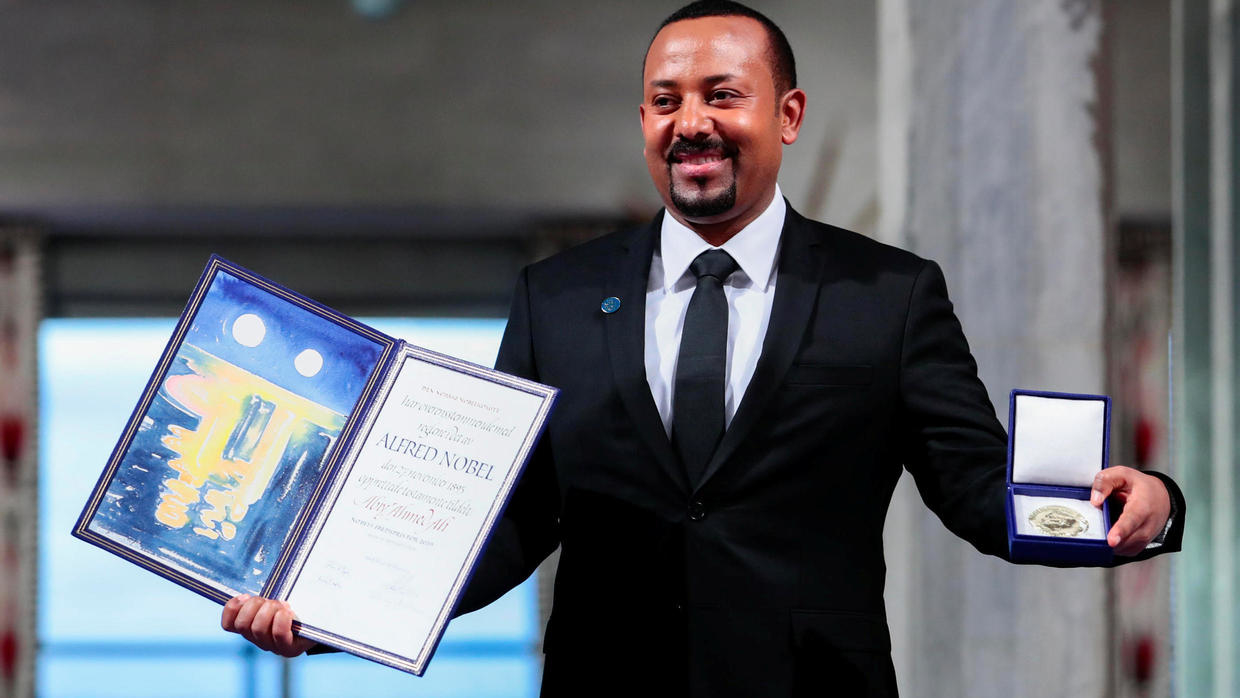


Some of the Ethiopian historical facts denoted by (*) are proudly taken from
*Wikipedia: details documented by the free encyclopaedia.