Deputy Prime
Minister Barnaby Joyce has demanded why the ABC didn't fire Yassmin Abdel-Magied
for her Anzac Day posted comments about a condition she identified, equally,
heart wrenching.
Yassmin
Abdel-Magied, Sudanese-Australian, who simply exercised her freedom of speech
by posting, "Lest we Forget (Manus, Nauru, Syria, Palestine)", on ANZAC
DAY, which she, probably, coerced to apologize or face the consequences, quickly
deleted the post soon after, but the comments continued to gather significant
criticism from indifferent people across the country with her apology sinking
in deaf ears.
As a global
citizen, she was entranced by her resilient responsibility and overwhelmed by
zealous compassion for those suffering in detention centres and screaming out to awaken public support. So,
honestly and pragmatically, it’s up to us to listen to the message without
slaying the messenger. The ABC and most
people did not believe she should lose her job because of her, concern, open
minded, not eyebrow rising, but eye opening comments. In a healthy
democratic country like ours, there is no limit to free speech and those ANZAC
soldiers sacrificed their life for the very ideals of freedom to live our lives
peacefully and speaking up without any intimidations and bullying. If Yassmin was
Caucasian (white), not Muslim, not black woman, not different race, and so
forth, her comments wouldn’t have attracted so much media and attention full of
hate. If I sound harsh and uncompromising in my
disagreement, it is a reflection of the level of my frustration and I kindly
ask readers to take it as an honest expression of an emotional appeal to
empathize before you dehumanize me as well. Also, we must, always, remember that every
difference of opinion & ideology is not a difference of principle and
shouldn’t be construed as a personal vendetta and should be discussed or
expressed with respect –demo-cracy. We can see that
world consciousness is shifting into a new dimension and the old rules no
longer apply. As many struggle to move from disbeliefs and old mindsets over
the political events of 2016 such as with the election of Donald trump, Pauline
Hanson’s return to the senate, the balance of power between the US, Russia and
China, the current race for nuclear war between the US and North Korea looks
set to shift in ways we probably can’t even imagine, to a growing acceptance
that change is inevitable, we can choose to prepare for the next phase and
create a fresh space full of new possibilities or we can bury our heads in the
sand or we can sit and wait hoping everything will change without our efforts. If you look at
your own life and the lives of those around you, you will see many things have
been transformed over the past couple of years. For some possessions, titles
and status have become less important while the true value of friendship,
integrity, love and compassion have been greatly realized. For those
feeling apprehensive about the future, on either a personal or global level,
consider that, universally, we are living through a period that closely
parallels with the events of the late 1960s, a time of massive social change,
explosive creativity and innovation that paved the way for the great
environmental, feminist and social justice movements of the 1970s. But life moves
in spirals, not circles, and this time round we have the exponential power of
the internet and social media to share our knowledge, power, ideas and
creativity. Together we can create miracles and play pivotal parts to change
what we can in our enduring journey. The way of doing things have changed since the16th
and 17th century, even since the recent 20th. People
(some) are aware of those changes, especially, those who have been through all
kinds of turmoils, dominations and persecutions except those who have missed
the powers. Churchill once told
the Palestine Royal Commission in 1937, "I do not agree that the dog in a
manger has the final right to the manger even though he may have lain there for
a very long time. I do not admit that right. I do not admit for instance, that
a great wrong has been done to the Red Indians of America or the black people
of Australia. I do not admit that a wrong has been done to these people by the
fact that a stronger race, a higher-grade race, a more worldly wise race to put
it that way, has come in and taken their place."
That was long time ago. I don’t blame Churchill and
all domineers; he was talking with brain and dominating time of that era. We’re
reading a different book now. There is no going back to those ancient
rationales, caves, fires, killings … anymore.
Today, starting now, we all need to change the way
we do all our life enhancing businesses and stop being irritable about the
people who are doing things in a very diverse way than us. “Insanity is doing the same thing over and over again
and expecting different results.” –Albert Einstein
I think, make no
mistake, Australia’s freedom of speech, values, privileges and way of life is
downright at risk. What do you think?
“We must learn
to live together as brothers or perish together as fools” –Martin Luther King
Jr.
Think of the huge destruction of war by elite egomaniacs of the 21st century.
The late Dr Khalid Muhammad's May 1994 appearance on
an American television talk show hosted by Phil Donahue on the Phil Donahue
Show. He is an American black activist who was born Harold Moore Jr.,a
prominent Afrocentrist and speaker on African history, came to fame as the
National Assistant to Louis Farrakhan, leader of the Nation of Islam, until he
finally got condemned and removed from his position and censured by the US
Congress for his forthrightness and resilience to stand for black people’s
rights and strong condemnations of white supremacy.
Some of his eloquent vocalizations, “Have you forgotten that once we were
brought here, we were robbed of our name, robbed of our language. We lost our
religion, our culture, our god...and many of us, by the way we act, we even lost
our minds”, have been used in rap music and the like.
This is an hour show posted in four part series and
you need to see (all 4 parts) the full show, the robust discussions with no
animosity but at times emotionally fiery with fury questions from the audiences
as well as the host and the final honest and unequivocal answers by Dr
Muhammed, where the host failed to acknowledge that and recurrently calling him
“Mr Muhammed”, responding to questions dynamically in a calm and credible
manner. He participated in heated arguments with Jewish audience members and
the host amid responding by exalting explanations of his unrestricted
statements.
PART 4
It’s about time that public discussions like this
should be established in the Australian mainstream media, Day Time Show, preferably,
hosted by the non-status quo presenters, either by Australian indigenous
journalists like Stan Grant or other black professionals who have the competencies
but often denied the opportunity, for the same reasons articulated by brother
Muhammed, to be in the public broadcasting domain for far too long.
We want day time discussion forums, like that of Phil
Donahue Show, about social, racial or any issues deemed necessary for the
benefits of society, be presented by black people in the media by attacking
issues without confronting invited guest speakers or partaking audiences unlike
Donahue who frequently takes sides vehemently.
Hosted by Ray Martin, veteran Gold Logie winning
Australian television journalist, Yassmin Abdel-Magied, Sudanese-Australian
mechanical engineer, social advocate, writer & Queensland’s Young
Australian of the Year & Zambian born Santilla Chingaipe, SBS’s award
winning journalist, deliver a revealing look into country’s attitudes in a series
of special programming putting the spotlight on racism and prejudice in
Australia today.
The survey was undertaken for the documentary as a
part of Face Up To Racism week in which SBS explores, magnifies and challenges
Australia’s understanding of racism and prejudice. The survey’s key findings
were alarming. One in five Australians have experienced racism in the last 12
months according to one of the biggest ever surveys conducted on racism and
prejudice in Australia. That’s similar to one in four mental health problems in
Australia. It may not be related or the only cause for the most stigmatized
illness, but the effect is indisputable.
Ray Martin believes Australia has grown up a lot
since he was a kid in NSW and the attitudes towards indigenous people and
immigrants had changed dramatically, but said there was room for improvement.
“I believed the issues our indigenous people face is
more about neglect rather than deliberate racism,” he said.
“I think Australians are ignorant, not racist, and
if this program shines a light into that dark corner then that’s a good thing.”
The show was shocking and confrontational at times
and undoubtedly this might open the doors for sweeping discussions to emerge
and obviously, change people’s perceptions about racism. I wasn’t baffled to
see all the familiar comments and rages; in my life time, I’ve seen it all, but
find it hard to believe these days in age this social cancer still lingers. So,
to lessen or eliminate it from our way of life, the best way would be to train
our brain.
Our brain has its own unique way of healing. It can
change itself; it can create new neural pathways to adapt to its needs. Scientists
now know that the brain has an amazing ability to change and heal itself in
response to mental experience. This phenomenon, known as neuroplasticity, is considered to be one of the most important
developments in modern science for our understanding of the mind. It’s the
brain’s ability to change in response to incentives and any experiences we
encounter in our lives.
“No one is born hating another person because of the
colour of his skin, or his background, or his religion. People must learn to
hate, and if they can learn to hate, they can be taught to love, for love comes
more naturally to the human heart than its opposite.” –NELSON MANDELA Let’s embrace our diversity!
MENELIK II STATUE, 1911, ST GEORGES CATHEDRAL, ADDIS ABABA
The victory signalled the decline of European
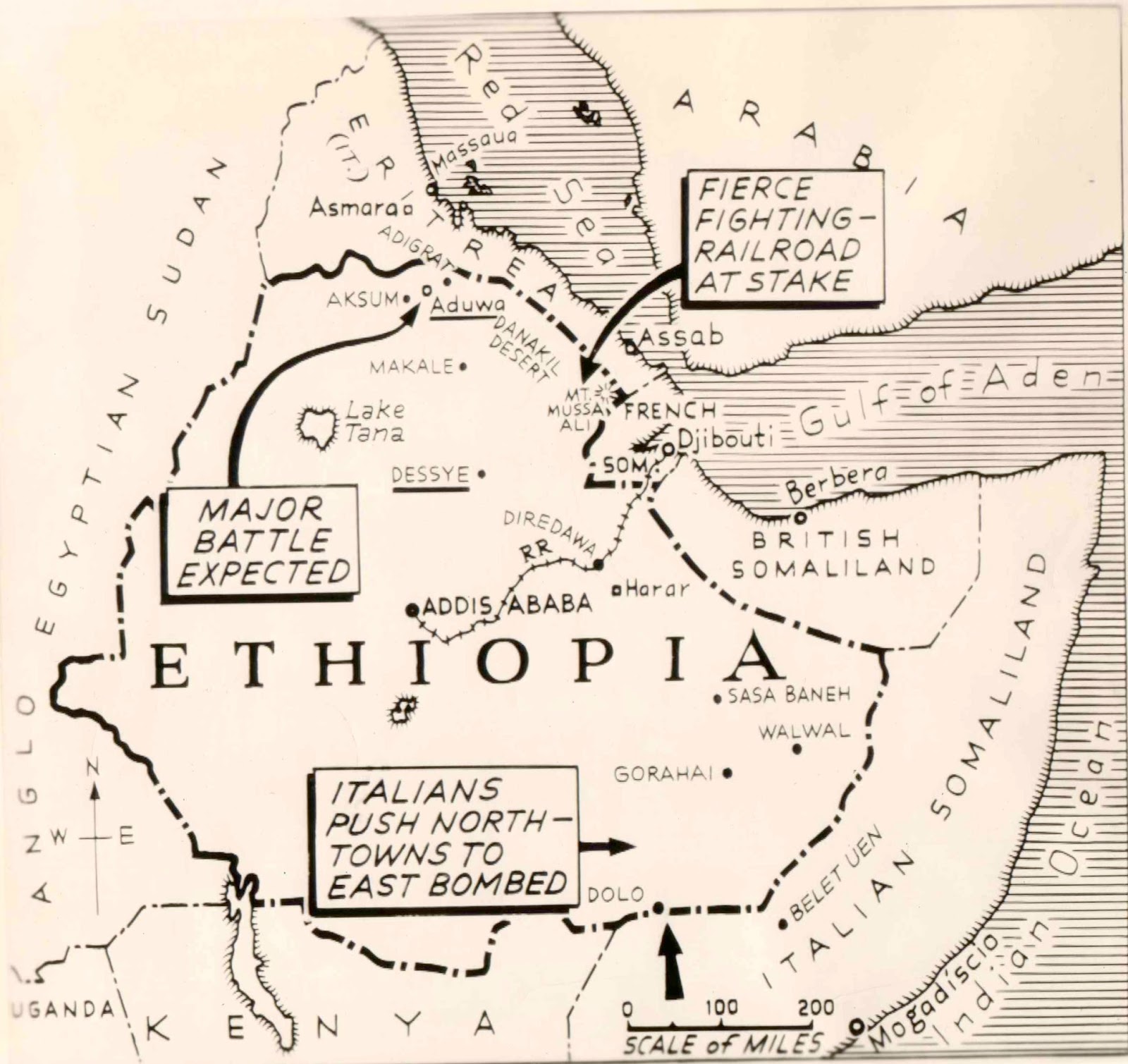
colonialism in Black Africa. On March 2, 1896, Ethiopia defeated the Italian
colonial army in the Battle of Adwa.
ADWA
Major battle expected at ADWA (ADUWA)
Menelik II and his wife Empress Taitu Betul , married in 1883, came to
the Ethiopian throne in 1889. Taitu was a formidable empress and an astute
diplomat who proved to be a key figure in upsetting Italian imperialist designs
on Ethiopia. She used her exceptional intelligence to strengthen
and extend her power through an adroit blend of patronage, political marriages
and leadership craft.
She founded Addis Ababa (New Flower), which remains Ethiopia’s
capital city today, and the final decades of her reign witnessed a period of
modernization.
She was an impressive Queen from 1889–1913 after
Menelik’s death in 1906 and died in 1918. Menelik also dedicated to actively suppressing slave
trade, destroying notorious slave market towns and punishing slavers with
amputation by mid1890.
At the Battle of Adwa the Ethiopian fighters from
all parts of the country rallied to the cause. Several ethnic-groups played
great role during Menelik's reign and after that, with Amharas and Oromos
holding key positions in the central government. Since Menelik became King of
Shewa, he gave the top leadership of the military positions to Ras Gobana
Dacche, Ras Makonnen Gudessa and finally to Fit.
Menelik II Coins
After Menelik's death, Oromos continued to hold key
positions in the empire up until the second time Italians invaded Ethiopia. The
most dominant person in the empire was Habtegyorgis, from the Oromo Speaking
Chebo tribe, whom some call him as the "King maker" and he was the
most prominent Prime Minister & War minister.
BATTLE OF ADWA
The Ethiopian army at Adwa was, therefore, a mosaic
of various ethnic groups and tribes that marched north for a common, national
cause.
Professor Mammo Muchie speaking on the victory
of Adwa
The Italians thought that he would surrender
power to them because they had been supplying him with arms. In that same year Menelik signed the Treaty
of Wuchale.
Emperor Menelek II of Ethiopia Empress Taitu
The Italians tried to deceive him by having two different
versions of the treaty both in Amharic and Italian, with the Article 17 reading
differently in each version. The Italian version said, “The Emperor consents to
use the Italian government for all the business he does with all the other
Powers or Governments.” The Amharic version said, “The Emperor has the option
to communicate with the help of the Italian government for all matters that he
wants with the kings of Europe.”
AFRICA POST EUROPEAN SCRAMBLE
When Menelik realized that he had been cheated
he rejected the treaty and ceased all the privileges from the Italians. In
Europe all countries except Turkey, Russia, and France chose to support the
Italian version of the story. Menelik confronted the Italians, angering Rome,
which ordered the Italian governor of Eritrea, General Baratieri to retaliate
and captured the cities of Adigrat, Adwa and Makalle from the Ethiopian army
and was celebrated as a hero in Italy.
The Italians fatally underestimated the Ethiopians,
thinking that they were barbarians who needed Roman civilization. Bartieri
returned to Eritrea boasting that he would bring Menelik back in a cage, not
knowing Menelik had assembled 196,000 men in Addis Ababa and over 50% of them
were armed with modern rifles. General Bartieri could only muster 25,000 men and
when he realized that he was outnumbered he retreated to Adigrat, where Menelik
overwhelmed him for 45 days.
Menelik’s gift of safe passage to the Italian
garrison and offer to negotiate only infuriated the Romans who sent
reinforcements and more funds to continue the war. Instead of attacking, as
Baratieri hoped he would, Menelik concentrated his forces at Adwa and waited.
While both sides waited for the other to attack throughout February 1896,
supplies started to run out for both. Menelik had set up depots to store food
for his army but soon even these began to empty and the Army considered
retreat. The Italians’ supplies would only last until March 2 on half rations.
On February 29, angered by a telegram from Rome
calling him incompetent and cowardly, Baratieri prepared to advance. He planned
to send his troops along different routes to meet on the high ground
overlooking Adwa by dawn on March 1. The country was so difficult to cross,
however, that his forces became lost and confused. The confusion expanded great
holes in the Italian lines and the Ethiopian warriors took advantage. Led by
Ras Makonnen of Harar, father of Emperor Haile Selassie I, who, with 30,000
warriors engaged in battle, was joined by other masses of Menelik’s warriors.
In the battle that resulted, wave upon wave of Ethiopian soldiers attacked the
Italians, causing them to run off in total confusion.
Ras Mekonnen Gudessa, general and the governor of
Harar province, father of Emperor Haile Selassie I
At the end of the battle, 289 Italian officers,
2,918 European soldiers, and about 2,000 Eritreans, fighting for the Italian
sides, were dead. More were wounded, missing, or captured. Menelik stopped the
torture of prisoners and forced the rest of the captured troops to march to
Addis Ababa, where they were held until the Italian government paid 10 million
lire in reparation.
At
the news of the victory of Adwa, Black people all over the world rejoiced.
Ethiopia became a symbol of the struggle for freedom and Black intellectuals
and religious leaders made pilgrimages to the country. The battle of Adwa not only saved Ethiopia from
colonization by Rome, but also raised the status of an African country to an
equal partner in the world community. When the Italians under Mussolini again
invaded Ethiopia 40 years later, Black people worldwide supported Haile
Selassie I’s efforts to regain freedom for Ethiopia and celebrated on May 5,
1941, when the Emperor returned from exile in triumph to Addis Ababa.
Ethiopian Liberation Day: May 5th, 1941, His
Imperial Majesty stands on an unexploded bomb dropped by Italian.
1935 Barefoot Ethiopian infantry leave Addis Ababa
to meet the Italian army
Artistic impression of the Battle of Adwa
Ethiopia is one of the most mosaic nations in the
world, mothering over 80 different ethnic groups all deserving equal opportunities.
I do not mind if our leader/president is from dominant (e.g. Oromo, Amara) or
minority nationalities (Tigre, Walaita, Gurage) as long as s/he demonstrates
all the qualities the leader has to offer and based on merit not idolized
personality profiles. Indeed, we should be extra glad if the leader/president
comes from the tiniest ethnicities. That should be celebrated as it is one
powerful way of ensuring social equity and justice thereby transforming
society.
Unlike today’s fragmented and divided generation, our
patriotic forefathers fiercely defended all sorts of punitive foreign
aggressors, in solidarity with little or no bitterness among themselves, trying
to colonize our country in order to gain access to our wealth to smuggle and use
it for their own prosperity.
Time to accept, appreciate our differences and
differing of opinions without hatemongering and work together with those
colleagues who have a shared passion for making a difference for individuals
& transforming the community for the better.
Playing the ethnic card game is to fall victim to
destructive identity politics that breeds division, hatred, conflict, and
cynicism by making overinflated excuses of past grievances.
The process of unifying people is difficult and the
road to unity is often littered with the debris of historical grievances,
animosity and resentment.
The realities today are different than they were ten
or twenty years ago. Aligning one’s thinking and actions with changing
realities and circumstances is a sign of wisdom and political maturity.
We must, always, remember that every difference of
opinion & ideology is not a difference of principle and shouldn’t be
construed as personal vendetta and should be discussed or expressed with
respect.
If there is one thing I detest and reject in the
Diaspora Ethiopians, it is political bluffing, power mongering, egos and
self-promotion/centeredness and hypocrisy. Breaking up, narrow group think,
personality worships, arrogance, hidden agendas, one group trying to undermine the
other and so on will not advance the common cause and or respond to the unity
of all Ethiopians especially our new breeds - youths.
Failure can be turned into an opportunity to learn
and grow. I say it can because it requires a particular attitude to benefit
from our failure. Without that mentality, all our failures will go to waste.
This is true in politics as it is in personal life for a leader as well as a
follower. So what is that mentality?
It is a mentality that is willing and able to
reflect on past experience – past actions and their outcomes. It is only
through such reflections that one learns one’s strengths, weaknesses and the
environment and conditions in which actions were undertaken and what could have
been done differently that could have resulted in a positive outcome. It is not
enough to admit collective failure. One needs to evaluate one’s role in the
failure and accept it. This is even more so if one is a leader under whose
watch an organization – business or political – failed. Denying (to one self
and others) failures and personal accountability and scapegoating or blaming on
“globalization, end of cold war, etc.” will not do. Leaders without such mentality
cannot educate themselves from past failures and therefore deserve no second chance.
We see individuals, political leaders, professionals
of all sorts, our academics (historians), groups and organizations of all
stripes stoking the fires of ethnic and tribal hatred, fanning the flames of
sectarian and religious violence and instigating all forms of conflicts,
disagreements and enmities by delivering inconceivable historical and personal
assessments of our enormous past.
We have all been part of the problem and part of the
solution at one time or another. But now all of us have an opportunity to
become part of the grand solution without fabricating history and avoiding
vengeance to the political problems facing all of us in the diaspora and in our
country.
Did you ever know” that Ethiopia is the birthplace
of coffee? It was in the forests of Keffa region (see on the map) that coffee was discovered, by a goat shepherd called
Kaldi, where it grew wild.
Kaldi, the young goat herder discovered coffee after
watching his goats frolic energetically after eating the fruit of a coffee
shrub. It is a part of the history, the culture, the economy and its ceremony which
is the daily life of Ethiopians.
Ethiopian people daily hold coffee ceremony as an
integral part of social and cultural life in a ritualised form of making and
drinking coffee socially to show a mark of friendship, respect &
hospitality. Ethiopia brewed a culture of ritual around the
roasting, steeping, and drinking of coffee. Brewing coffee in a jebena (clay pot) is one of the oldest
methods of making coffee. See how coffee ceremony, using Jebena (pot), is
performed in the presence of visitors or invitees whatever the time of the day.
Coming together in an Ethiopian coffee ceremony is
one of the most generous, ritualistic ways to drink it. The ceremony takes
about two hours from start to finish, beginning with the roasting of beans in a
flat pan over coals then crushed, traditionally, by mortar and pestle, before the
hefty pile of coffee is put in jebena to boil.
With the scents of frankincense and myrrh mingling
with the aroma of freshly roasted coffee, the multi-hour ritual might seem like
a special occasion to an outsider, but in coffee’s native home, it’s simply an
everyday lifestyle looking forward to drinking and meeting family and friends.
Coffee has social value in our society. It is deep
rooted in our culture. The coffee ceremony in local areas is used mainly for
social gatherings. In the mornings and evenings parents, especially mothers
gather together for a coffee ceremony and also use it as a platform for
exchanging information in their surroundings. It is a means of communication.
When people sit down they usually spend over two hours finalizing the ceremony,
starting with the preparation, and then roasting to brewing it.
Ethiopia, one of the oldest countries in the world,
a country of three thousand years of history, thirteen months of sunshine and
home of the earliest known humankind, Lucy, our ancestor, also displays
exquisite and authentic cuisines to devour.
In Ethiopia entertaining our guests with food and
music is an integral part of our social and family life. Usually people do not need advance warning.neighbours and
strangers who just drop by expect to be at least served with some kind of
nourishment.
It's the tradition you'll experience when you go out
for Ethiopian food, where meals are served on a communal platter (mesob see picture- a colourful platter hand made from straw) and food is scooped up
with bits of injera - a huge, round,
thin delicious, spongy flatbread.
Injera
is served with most of Ethiopian meals.
In Ethiopia, it's OK to share a plate of food and
eat with your fingers (see picture). Eating
from the same plate with others is one of the most common dietary social
customs in Ethiopia. Our custom also carries strong significance in Ethiopian
social culture. Eating all together while chatting, laughing and discussing
about life, business, education, religion, culture etc.… Eating from one plate
and friendly invitations are commonly exercised as important symbols that
signify one heart, one mind and one soul of true friendship.
When the bill arrives, they either share the bill or
one of the members with higher earning pays the entire bill. Paying for one
another is also one of the most common dietary social cultures in Ethiopia.
It is believed that people who eat from the same
plate do not betray each other, nor would they abandon one another in times of
challenges. Ethiopians also believed that people who eat together will live
together, live for one another and die for each other. Need not disappointed,
however, it’s unfortunate that this tradition and beliefs are gradually changing
with the changing times. This is, most likely, limited to big cities due to
change in lifestyles, exposure to foreign influences and other environmental impacts. Basically, Ethiopian food includes tastes and aromas
you don't typically encounter. But if you're willing to venture out of your
comfort zone and try something new, you'll find some of the best-tasting and
most healthful foods you'll ever eat.
A traditional Ethiopian meal involves many thick,
spicy, earth-coloured stews served family-style with injera. To fully enjoy the experience, you have to be willing to
surrender your utensils, share everything and let everybody’s hands soak in to
the essence of food flavour stopping only long enough to gasp for air, lick errant
goodness off your fingers and gulp the good taste of Ethiopian beer. For exotic flavours and communal finger foods, for
inexpensive and extremely satisfying Ethiopian foods, a visit to your local restaurants
and cafes will get you very close to HOME. However, please, feel free to comply
with your custom: you either share the bill or one person pays. Thank you.
There are a small number of Ethiopian restaurants
and cafes in your locals who are dedicated to share their deep-rooted
traditions of coffee ceremony and authentic Ethiopian dishes. It’s recommended
that you inquire if coffee ceremony is provided and all ritual factors
including costs. All they ask from the customers is, perhaps, patience, respect
their head bowing greetings, to slow down a little, use your fingers to eat
wisely and enjoy the meals. (Do you still
have any questions how to use your fingers? Please, don’t be shy, ask; they’re
there to show & tell.)
I have embraced all manners of esoteric arts, natural therapies, traditional forms of medicines, mind & body works, only to come up with nature's simplest of all remedies: rest & sleep, it has taken me all my life time to make peace with the enlightenment of rest & good sleep. I was the change that I was looking for in the wrong places at the wrong time.
Welcome to my site that inspires, informs, and most importantly empowers in every sense.
If something inspired you, I'm glad you are informed! Even if you're not, inspire me with your comments.
Hadiy-oss caberra!
-
Sintayehu Tilahun singing Dereben accompanied by Ras Band. I love the
song's fast beat and the way he goes back and forth between Hadiyissa and
Amharic. I...
Berhanu Nega should not go back to Eritrea.
-
I am confident that he is highly regarded in his field as an economist, as
one of the leaders of Kingit, and as chairman of Ginbot 7 , but I have
doubts ab...
Events leading up to Ginbot 20 and after
-
NY-TIMES archive From 18 years ago
Major General Fanta Belay (L) and General Amha Desta (R)
both killed after Mengistu coup attempt
* Mengistu tells of Exe...






 Posts
Posts


