We would like to invite everyone including recipients and donors on the opening day. If you have something to give bring it with you or call us before the opening date.
Click on images to enlarge for reading. If you still can't view clearly, save it on your desktop and view it with any photo viewing software.
FREELIEF is a
non-profit project & the first of its kind dedicated to creating acts of
kindness & doing universal good in Australia, and the humble beginnings of the
project today is meeting needs of the population far beyond the capacity of
government, and leading to the formalisation of FREELIEF, with a broader
purpose to support the poor, refugees, jobless, asylum seekers, homeless, the
distressed, the aged, and the weak.
Donations
include, but not limited to, pre-loved & latest ladies’, men’s, children’s,
work & casual clothing and other accessories such as mobile phones, computers,
books, cassettes, vinyls, CDs, magazines, glasses, caps, hats, bags, purses,
home products and many more items are given free of charge to individuals &
families.
MISSION STATEMENT
FREELIEF is dedicated
to helping children, families, refugees, jobless, asylum seekers, homeless, the
distressed, the aged, and the weak in our communities to reach their full
potential by tackling the causes of poverty and injustice providing their
immediate needs.
SERVICES
FREELIEF meets
the specific needs of individual people through direct support services, and
also works with whole communities, connecting people across gender, age and
cultural divides to create a renewed sense of optimism and belonging.
FREELIEF is devoted
to collecting generous donations to provide assistance to people whose survival
is in crisis, threatened by violence, neglect, exclusion from care at no cost
irrespective of race, religion, creed or political convictions, at a chosen
venue.
Currently
our donations come from non-governmental sources such as private & individual
donors.
PREREQUISITES
FREELIEF operates
independently and conducts evaluations & basic requirements on the ground
to determine individual needs before facilitating the delivery of the best
required assistance in the community.
With the
purpose of assisting everyone equitably, to receive help from FREELIEF, proof
of one or two assessment verifications of the followings are required:
Refugees unable to sustain their day
to day expenses & incapable to qualify for any other help
Homeless
Families receiving centrelink
benefits
Jobseekers & students receiving
centrelink assistance
Men or women affected as a result of
economic disparity
Young people who can’t afford to fulfil
their needs
A person is entitled to 5 different
items at any one time. (e.g. clothing, electronics, books, household &.)
A person may receive donations again
after one year period, thus, to accommodate everyone equally.
Natural disaster & fire victims
BASIC GUIDELINES
FREELIEF is strongly
committed, based on the humanitarian principles to provide independent, ethical
& impartial assistance, helping those individuals & families who do not
have extra cash to buy them.
As committed individuals, at FREELIEF, we are neutral & do not take sides in
providing care on the basis of need alone, and pushes for increased independent
access to victims of crisis as required under our strict principles of basic humanitarian
guidelines.
FREELIEF is
rightly prepared to raise help, create awareness and advocate with individuals,
business owners & local governments on humanitarian concerns.
FREELIEF will
organize meetings with benevolent individuals, and arrange regular speaking
events and activities across venues deemed necessary to direct & obtain
more help.
LEADERSHIP
Simeneh
Makonnen, a consummate professional, employment consultancy and community development
& a leading pioneer in establishing,
the two major institutions, the first Ethiopian Community Association & African Soccer Club in Australia.
Halakhe
Ganyu, Social Worker/Counsellor & Psychotherapist who amassed extensive
experiences in counselling youths, adults, couples & families as well as appearing
at various motivational seminars & provision of the African communities frequently.
We are both,
refugees fortunately settled in Australia for so long, driven by our quest to
help people by changing their trashes into treasures to help others & our
own will not to accumulate material wealth until we are gone.
In our work
experiences & community related activities, we often witness violence,
atrocities, and neglect in the course of their work, much of which occur in
places that rarely receive humanely attention.
At times, we may speak out publicly in an effort to bring a
forgotten crisis into view, alert the public to abuses occurring beyond the
headlines, criticize the inadequacies of the aid system, challenge the
diversion of humanitarian aid for political interests, or call out policies
that restrict access to personal care or essential needs, unless we all
do our share, these causes might fall into deaf ears.
Even though
we have limited financial, human, and logistical resources, we are committed
individuals campaigning, operating independently and impartially to provide
assistance for people caught in crises in our community & around the world
hopefully attracting more talented volunteers to do their share by working
together in accordance with our basic guiding principles of humanitarian ideals.
We have
already witnessed the need in various communities as a result of economic
disparities where different crises are constantly recurring and some charities
selling donations to those people at excessive prices.
MANAGEMENT STATEMENT
Subject to
our guides, to operate successfully, we will manage our project honestly and
ethically creating an environment of trust, empowerment, respect and mutual
support building and improving on the task entrusted to our care, working
together as a team leveraging our talents and skills in a spirit of cooperation
and trust, being fiscally responsible, keeping administrative costs low &
inexpensive while ensuring the highest possible quality services to our
community.
"An
individual has not started living until he can rise above the narrow confines
of his individualistic concerns to the broader concerns of all humanity."
- Martin Luther King Jr.
For a
charity it is perhaps even more significant considering as non-profit
organisations depend on the goodwill and support of individuals, the business
community and government for their ongoing existence.
I wish my friends, former community colleagues and all
Ethiopians, including those who have attended this yearly festival organised by
both the youth and Ethiopian community association in Victoria and the
Ethio-Australian sports federation, a happy and successful new year.
Once again, it was good to see the annual Ethiopian soccer
tournament & cultural festival was organised here in the hub of the
majority of Ethiopians. However, I am not condoning to organising the occasion
only in one city. The festival can be organised wherever the amicable location
is chosen by members and organising committee. Nonetheless, I remember the last
tournament was held in Melbourne in 2010 on one ground all inclusive.
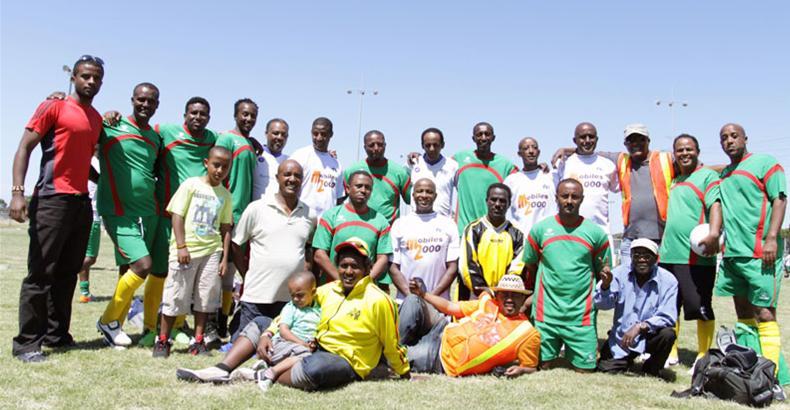
2010 Ethiopian's Soccer Tournament Melbourne
It was good to see that the overwhelming people supported
the principle of solidarity not disparity and frugality. I could not help but
saddened to see some of my friends chose to be otherwise. All in all, the
organisation and the turnout at the festival prepared by the community were to
full capacity. There were more families and children with entertainment such as
jumping on bouncing carnival castle balloon hired for them.
I went over to Yarraville, where the federation’s soccer tournament
was held, not far from Altona North where the community’s soccer tournament was
organised, to see some of my friends and observe the outcome. Obviously, there
were few crowds and I was told that only few players turnout and they have to
forfeit some games. This is what happens when festivals are held on the same
days and times creating the unpredictability of the last minute decision by
participants. One couldn’t help but think what would have happened had this
been organised in unison.
2010 The Bold & the beautiful Team
I wish to express my deep gratitude and appreciation for all
the volunteers, organisers and participants. I am thankful for all of the
support and encouragement everyone has given the community irrespective of the
festival being held in two venues reprehensibly on the same days and times not
far away from each other. Although, disappointed whatever the reason for the predicament
to occur, I don’t intend to make it irreparable by naming, shaming and talking
evil of the already damaged circumstances and I sincerely plead to others to
refrain from abusing this gloomy status quo.
I wanted to thank everyone personally because being the
founding member of the community, it has always been my greatest aspiration for
all Ethiopians to be united and celebrate our cultural heritage in an
atmosphere of harmony. We all must know that if one is affected, we are all
indirectly affected.
As a prominent business stall holder, I was the only proud
and grateful individual who has displayed my business promotions based on our
cultural ideals and all sales of merchandises and T-shirt prints reflecting on our
cultures & positive aspirations.
Zelalem Print Display Stall
2012 is gone now. As our saying goes, ላለፈው ክረምት ቤት አይሰራም, (roughly translated), we can’t build a house
for the past winter. We can only hope mutual agreements can be reached
for the coming year festival and change of those agreements will not happen
again, specially, close to last minute preparation for the festival.
2012 Ethiopian's Soccer Tournament Melbourne
I urge both parties of the organising committee to be
committed and make a strong resolution to solve this dilemma and call for
solidarity to organise a better, bigger annual festival in 2013 by inviting
more business stall holders adding more colours to the celebration. Whatever
private or individual differences the other groups or members might have, for
the sake of the community and as an Ethiopian we need to look in to our communal
responsibilities, no matter how difficult and unmanageable the circumstances
might be.“United
we stand, divided we fall”. ድር ቢያብር አንበሳ ያስር.
Albeit we all came from different cultural backgrounds, we
have incurable enigmas of intolerable secrecy and silence in common impeding
the manner to open communication and honest dialogues harbouring fear of
retribution and ostracism. Time to accept, appreciate our differences and differing
of opinions without hatemongering and work together with those colleagues who
have a shared passion for making a difference for individuals &
transforming the community for the better. Time for change to take its course!
It is said that those who do not learn from past mistakes
are doomed to repeat it. Many mistakes and errors have been committed by
successive leaders in the past. These mistakes need to be identified, studied
and lessons drawn from them so that they will not be repeated again. We need to
build collective agenda to advance and support these mistakes and undertake not
to repeat them.
We mustn’t disrespect others who have helped us pave the
high way to success and mustn’t engage in character assassination (ye saawsim matifat) of anybody by giving in to other peoples gossip (waare) & trusting the tall poppy
syndrome saga (und saaw ye telawoon
hooloom saaw metilat, ye tewededewoon mawooded bana woo qe woom) – to hate
or like someone just because everybody does - instead of believing in ourselves
to make our own judgement about other people.
We
must, always, remember that every difference of opinion & ideology is not a
difference of principle and shouldn’t be construed as personal vendetta and
should be discussed or expressed with respect.
I am a strong advocate, passionate, rational, and strong
leader in human rights and equal opportunity issues affecting, not only
Ethiopian community, other African communities, a diverse range of communities,
the development of services for the disadvantaged and marginalised groups. I
always believed in cross-cultural community building and creating a healthy
society when I took the first step navigating through storms to establish
Ethiopian community.
It is time to replace bitterness with reconciliation; hate
with love that heals the community; revenge with forgiveness; hope with
despair; hurt with healing; fear with courage; division with unity; doubt with
faith; shame with honour;deceit with
candour and sincerity; anger with reason; cruelty with kindness and caring;
enmity with friendship; duplicity with openness; complacency with action; indifference
with passion; incivility with gracefulness; suspicion with trust; selfishness
with altruism; dishonesty with integrity; convenience with virtue; cunningwith moralities; ignorance with knowledge;
benightedness with imagination; acrimony with civility, desire with fulfilment.
If
there is one thing I detest and reject in the Diaspora Ethiopians, it is
political bluffing, power mongering, egos and self-promotion/centeredness and
hypocrisy. Breaking up, narrow group think, personality worships, arrogance,
hidden agendas, one group trying to undermine the other and so on will not
advance the common cause and or respond to the unity of all Ethiopians
especially the youths.
It
is that none of us can survive without each other. None of us can hope to prosper
while the rest are disenfranchised and subjugated. None of us can make progress
while the rest regress or stand still. We are now faced with the fierce urgency
of creating the conditions of unity.
Playing
the ethnic card game is to fall victim to destructive identity politics that
breeds division, hatred, conflict, and cynicism.
The
process of unifying people is difficult and the road to unity is often littered
with the debris of historical grievances, animosity and resentment.
The
realities today are different than they were ten or twenty years ago. Aligning
one’s thinking and actions with changing realities and circumstances is a sign
of wisdom and political maturity.
In general, society seems to have put power,
ethnicity, and profit ahead of humanity. Our world is still struggling with
poverty, environmental pollution, disease and the devastation of war while
grieving over memories of both world wars, Gallipoli, Korean, Congo and others.
Greed, the struggle for power between the haves and have nots has taken us on a
path towards competition instead of cooperation paving the way for destruction
and we still continue to torture each other while mourning for the past. As a
result of all these circumstances, we have been disconnected from our heart and
soul and from the earth that sustain us.
Failure can be turned into an opportunity to learn and grow.
I say it can because it requires a particular attitude to benefit from our failure.
Without that mentality, all our failures will go to waste. This is true in
politics as it is in personal life for a leader as well as a follower. So what
is that mentality?
It is a mentality that is willing and able to reflect on
past experience – past actions and their outcomes. It is only through such
reflections that one learns one’s strengths, weaknesses and the environment and
conditions in which actions were undertaken and what could have been done
differently that could have resulted in a positive outcome. It is not enough to
admit collective failure. One needs to evaluate one’s role in the failure. This
is even more so if one is a leader under whose watch an organization – business
or political – failed. Denying (to one self and others) failures and personal
accountability and scapegoating or blaming on “globalization, end of cold war,
etc.” will not do. Leaders without such a mentality cannot educate themselves
from past failures and therefore deserve no second chance.
To me, being educated means being responsible, accountable,
open-minded, tolerant, compassionate, decisive, insightful, considerate,
ambitious, realistic, and perseverant.
We
see individuals, political leaders, groups and organizations of all stripes
stoking the fires of ethnic and tribal hatred, fanning the flames of sectarian
and religious violence and instigating all forms of strife, disagreement and
enmity.
By reciting my mantra of personal convictions daily &
living a life of principles to the fullest in a lifelong journey with steadfast
endurance, with so much despair and discomfort, eventually, achieving happiness
and contentment in the process, exclusively, knowing the success of founding
the institution for all Ethiopians through my life long struggle to survive and
continuing to fight for social justice and equality to prevail in our communities
everywhere thereby beaming on our homeland, I feel I have fulfilled my mission
without regret.
Ethiopia is one of the most mosaic nations in the world,
mothering over 80 different ethnic groups all deserving equal opportunities. I
do not mind if my leader/president is from dominant (e.g. Oromo, Amara) or
minority nationalities (Walaita, Guragie) as long as s/he demonstrates the all
the qualities the leader has to offer and based on merit not idolized
personality profiles. Indeed, I will be extra glad if the leader/president
comes from the tiniest ethnicities. That should be celebrated as it is one
powerful way of ensuring social equity and justice thereby transforming
society.
In his autobiography, Gandhi wrote, “Man and his deed are
two distinct things.Whereas a good deed
should call forth approbation and wicked deed disapprobation, the doer of the
deed, whether good or wicked, always deserves respect or pity as the case may
be. ‘Hate the sin and not the sinner’ is a precept which, though easy enough to
understand, is rarely practiced, and that is why the poison of hatred spreads
in the world….”
If one hates another
because of race, colour, religion, ethnicity or other factors, the result is
more hate. Mandela said, “No one is born hating another person because of the
colour of his skin, or his background, or his religion. People must learn to
hate, and if they can learn to hate, they can be taught to love, for love comes
more naturally to the human heart than its opposite.” Needless to say that if
hate is learned it can also be unlearned. If love can be taught it can be
spread across the land.
We should really follow Gandhi’s precept that if we must
hate, we “hate the sin and not the sinner.” It is a tough precept to follow and
live by without perfecting oneself with enormous change of attitude &
self-discipline. We have all been part of the problem and part of the solution
at one time or another. If this is not true, then “he who is without sin should
cast the first stone”. But now all of us have an opportunity to become part of
the grand solution to the political problems facing all of us in the diaspora
and in our country.
Let’s join together by resolving our differences and
strengthen our solidarity to organise a cultural festival for all Ethiopians by
inviting all business vendors to join by displaying their businesses at the
chosen festival venues.
The establishment of
Annual Ethiopian Soccer Tournament in Australia has been special not only for
organizing to play soccer, but it reflects our tradition of family values by
creating an atmosphere of unity, friendship and reunion.
This event was especially enjoyed by young Ethiopians who are growing up in
Australia attending the event every year. The festival has planted a burning
sense of nationalism as well as pride about who we are and the unity they
trying to reflect.
1996 Melbourne
Ethiopian Tournament For parents who have been telling their
kids, how Ethiopians are good and that Ethiopian culture is special is a great
opportunity to prove what they are talking about.
There were plenty of Ethiopian manners such as politeness, humbleness and
respect around the ground while everyone in attendance was very happy to be
among fellow countrymen and have a good time.
For the children of Ethiopia, events of the past 14 or more years and
experimentation with alien ideology have brought only misery and divisiveness.
While those who carried on this experimentation are getting older, the younger
generation is seeking to try something different. Ethiopian Soccer Tournament shined because it was fuelled by its participants'
strength and character, indicative of the richness of Ethiopian culture. It
also showed what Ethiopian values are individually and collectively. That is
why this event was attended by huge number of young Ethiopians. One of them
told me that nationalism and togetherness is the way to go for the young
people.
In light of many negative news reports out of and about Ethiopia, and the
polarizing political climate, the event provided a source of comfort, a display
of nationalist feeling and a sense of togetherness.
Ethiopian Soccer Tournament is a beacon to all Ethiopians, the Ethiopia's
politicians and leaders that the answer to the needs of Ethiopia is not found
in alien ideologies and dividing cultures, but in each of us as we work
together in solidarity for the common goals.
It is important to note that what keep this organization going are its founding
principles which all of us like. These principles make it a non-political,
inclusive, sports and cultural organization.
As in every other year, this year's event
was not without controversy. The two big issues were whether the
Ethio-Australian Soccer Federation should receive as much exposure that it got,
and if it was appropriate for the federation to continue to form a new soccer
tournament organization instead of strengthening the already existing club
under one collective name working together with the sports & cultural body affiliated
with Ethiopian community Association of Victoria dealing with the nature of
sports & cultural organization unless otherwise both parties agreed to do
all other businesses reaching at resolution not revolution. Even if need be to
work as a separate body of sports & cultural festivities federation, no
issues are so important for all stake holders or factions and communities not to
organize these once a year only social events in agreement or harmony. Particularly, the acceptance of other
sports factions and the federation was in question because of the influence it
might have on the founding principles of our unity in the community and thwarts
our tradition by creating divisions instead of unifications. God knows who is
confusing who, as I only rely on my intuition of unity no matter what issues they
(the differing groups) may have.
As we all know, last year’s annual Ethiopian soccer tournament was organized in
two cities, Sydney and Adelaide, organizers failing to reach an agreement if
there was one. Since the annual tournament events’ inception, Ethiopians from
all Australian States have been coming together once a year, meeting as one
Ethiopia to enjoy the soccer games and other social festivities. It is a time
Ethiopians get together, not only for the sporting events, but for family
reunions, cultural events and friendship. This gracious yearly event was
principally initiated by an individual business owner whose idea was entirely
reflected on organizing a cultural festive season for everyone annually. As time went by,
everyone believed it is a free Ethiopian day festival ought to be organized by the
Ethiopian Community Association rather than business ventures.
Although, this concept was precipitated by the community’s weakness, it
obviously has come a long way to get where it is today. It is not very
difficult to list who did what. It only can be said the hard work and
dedication of those who are involved has paid off by making our community the
longest functioning Ethiopian organization and still growing.
It was disheartening to see instead of collectively organizing the tournament; different factions
were formed to organize events the same day as the Ethiopian community’s annual
gathering. United, we conquer, divided we fall;
the festival was inevitably divided between the factions and the community.
While some members of the community attended the already formed Ethiopian
community’s tournament, new members and young Ethiopians took part in the new factions
and some found commonality and attended both tournaments in a bid to harmonize
both parties and not to abandon their friendship in both as Ethiopiawinet.
As thousands of Ethiopians converged on Melbourne’s western suburbs for the
year’sevents in 2008,
where both factions’ tournaments took place, Ethiopian flags, music, food,
colors and sports drew young and old, men and women and Ethiopians originating
from most every region of Ethiopia. These Ethiopians now live in many different
cities and states throughout Australia, but they have not forgotten their
Ethiopian roots. Despite the divisions, no other event has drawn more
Ethiopians in the Diaspora to celebrate the beauty, diversity and joy of their
cultural heritage than this one week in a year—a week that is super-charged
with “everything Ethiopian.”
Although, there were not much of business stake holders at the ground, few were
there to sell Ethiopian cuisines, jewellery and costumes. I am sure it would have
been huge festival had plenty of Ethiopian business owners been notified to participate
and had the tournament been organized by one united community in this once a
year amicable gathering. The same scenario is repeating again and again like
that of the political situation back home.
I was struck with the image of what a powerful force would emerge if such
unity, joy and enthusiasm for Ethiopia could somehow be captured and used as
the building blocks for the “one soccer tournament” I have been envisioning!
Nowhere did I see this more than in the young Ethiopians who loved their heritage
and each other without regard to tribalism, racial biases, factionalism and
divisions found among older Ethiopians. This is the “New Ethiopia” of tomorrow
that I saw on their faces. Imagine what we Ethiopians in the Diaspora could do
in tackling our problems if we could transport such unity and openness to those
in Ethiopia, not only to our families, but also to the greater family of
Ethiopia.
However, on the other hand, I feared they were detached from the harsh
realities of real life in Ethiopia. We rarely see any young people at any of
the Ethiopian community meetings. Most everyone at these meetings is over
thirty years of age. But at any soccer or social events and at the soccer
presentation nights and New Year events, most everyone was under that age.
I wondered what would happen if older Ethiopians could embrace the youths’ view
that placed little emphasis on ethnicity, political affinity, regional
divisions and racial prejudices. I believe older parents are not including
their children in the know what, why, when and how of the Ethiopian problem let
alone some of the older ones fully participate in the community sector. I also
wondered how well the youth understood the level of oppression, tyranny and
hardship that Ethiopians were facing back home and wondered why no young people
were attending the meetings. I then decided that the better of these two
separate realities could be the answer. The question is how can we combine the
best of both and act on it? As I saw those flag waving happy young
people, I was overwhelmed with the hope that somehow, this love of Ethiopia,
alongside the joy of living in a free country like Australia with its openness
and acceptance of other nationalities irrespective of its implicit racism,
could somehow be channelled into these young people, by their parents, community
and activity organizers, deeply caring about those stuck in the current
situation and tragedy of life within Ethiopia. I wondered whether the gap
between these two realities could come together to form a greater youth
movement to free Ethiopia.
I also wondered whether older Ethiopians could learn from the youth who saw
each other as “equally Ethiopian.” The youth were not being divided against one
another based on ethnic suspicions and loyalties, regional background,
political alliances, religious views and cultural backgrounds like their
parents. Here in Australia, it is no longer mattered so much at least to the
young people whose only joy is to get together and play soccer and have fun
until they find out themselves where they truly belong.
In Ethiopia, something like ethnic loyalty
and achieving dominance over other groups was equated with opportunity and even
basic survival. Here it was equated with competition over who would win the
soccer games—two different worlds.
The openness of the youth to each other showed a glimpse of a promising
possibility—that if you the reader, not only the politicians, activists or
educated Ethiopians, could change in this setting, we could change in another.
Despite the negative problems of Ethiopia, it makes me feel very happy to be
part of it. When you look around, you see a rich background of Ethiopian
images. You might notice the Ethiopian flags circling the stands or peaceful
Ethiopians walking—young and old—smiling, holding the hands of their young
children and perhaps, wearing Ethiopian flags on their clothing. You do not see
the differences of ethnicity, but instead, you see people as Ethiopians or
simply, people as people—all beautiful and unique.
Seventy per cent of the people at the soccer ground were young, meaning under
the age of 35. They were showing their patronage of anything Ethiopia—buying
Ethiopian flags, T-shirts with Ethiopian images and words, Ethiopian CDs with
Ethiopian music and Ethiopian food. Hundreds of Ethiopians packed into the
pavilion to watch the mini traditional dances of different Ethiopian ethnic
cultural celebration before the game.
I have often talked about my dream of the diversity of Ethiopians becoming a
beautiful society. What I saw at the soccer field were simply “Ethiopians,” not
tribes, political groups or factions. What I saw was a momentary display of
that beautiful society of Ethiopia, with all its diversity and complexity. I
saw the solidarity in this society of different colours, shapes and sizes.
People frequently ask me what my wish is for Ethiopia and I can tell you, I saw
it that day. I saw the dancing and the joy. I saw my society that I have lived
and been dreaming about. I saw humanity before ethnicity. I looked at the
beauty of each person as a unique human being. I saw the solidarity for a New
Ethiopia. I temporarily disconnected from the harsh reality of what is going on
in Ethiopia through participating in this celebration of our differences. When
the music ended I was brought back to reality and the joy I had experienced was
replaced with the knowledge that our family of Ethiopians were dying back home.
I wanted all the more for this beautiful society to include them.
Those at the soccer field all seemed to be so in love with Ethiopia; yet, there
was something missing - not only an understanding of how bad things were in
Ethiopia, but a lack of involvement in changing the downward direction of the
country. At every meeting, I saw no young people giving input or becoming
involved. Those making the decisions for the future of Ethiopia were all older.
Ninety-nine percent of them were men. I wondered where the women were too.
I also wondered why a whole generation of young Ethiopians is so disconnected
from what will really change Ethiopia. Their love of the country will do
nothing without action. Those young Ethiopians buying Ethiopian flags, T-shirts
and so on should be taught and told about their country and that the future of
the country is in their hands.
I was brought back to the reality of the children of Ethiopia who are dying
because of the lack of clean water, malaria, or the lack of child and maternal
health care. I think of the Ogadeni, Afar, Oromo or Anuak young women or girls
who have been viciously sexually assaulted or raped by the military—the same
military agents of the current regime who are supposed to be protecting them,
but instead brutalizing them with impunity.
I think of those young and old who have spoken out against such abuses and ended
up in jail. Consider the reality of life for the beggar, for the young girls
selling their bodies because they have nothing to eat, the crying mother
because she has no food for her children and for those running from Ethiopia
for opportunity, but dying on the road or on board ships in the Red Sea instead
of realizing their dreams of freedom while crossing to the unknown world or
destinations.
I was brought to the reality of Meles making Ethiopia landlocked and then
giving Ethiopian land to Sudan and foreign profiteers. And now he is gone, his
protégé has taken over promising to finish what Meles has started. I think of
how he has sent Ethiopian young men by force, with no choice, to die in a
foreign land - Somalia.
I thought about the lack of acceptance between Ethiopians when someone will not
like another Ethiopian simply because they are Oromo, Tigrayan, Gurage, Amhara,
Adere, and Gambela or of some other ethnic background. I then thought about the
divisions between leaders in our political organizations, religious
organizations, and civic institutions who will not agree to disagree for the
sake of a better Ethiopia. The reality of living with such hatred is that it
robs us of our unity, joy and future as a country.
Gone are the naïve old days where activists and politicians design an ideology,
strategy, and tactics, and tell everyone that their way is the best way. The
only goal now is some form of institutionalized democracy and pluralism. The
rest is flexible - whatever it takes to get there. One must be flexible while
appearing decisive.
All of these realities hit me so much harder after I saw the solidarity we are
trying to produce while creating divisions in institutions like soccer
tournaments and the community. It is a tragedy filled with self-righteousness,
greed and power motivated by personal ego attempting to create or build another
dam instead of trying to find the solution to the fall out to the already
established institution and rebuilding it in a united effort. This brought me
to the reality that the purpose of living in this world is to live to the
fullest of our purposes that God has given to every person. That nearly always
means living with compassion and commitment for the well-being of others, going
beyond a selfish existence where we focus only on our selves, those close to us
or our families to say the least.
This reality of life for Ethiopians back home is vastly different than the
Ethiopia being celebrated at this event. To this event Ethiopia is an illusion
and any shreds of reality still attached to it are further disintegrating. As I
celebrated with the bright and hopeful faces of young Ethiopians, I celebrated
their solidarity and joy as I mourned in my heart for my people back home in
Ethiopia and for those living here who unable to create solidarity and live in
harmony, acceptance and compassion for all Ethiopians irrespective of ethnicity
and build one community, many communities if need be, nonetheless, one
Ethiopia.
I was reminded why I am doing what I am. I yearn for the two worlds to come
together. Wake up and join the Struggle: Young people and women are a
powerhouse in the struggle and making change for the better.
These young people at the soccer already have the mindset of freedom,
democracy, the rule of law and equal rights between mixes of many people. They
have gone to school in the West and have adopted the thinking that has formed
the West. It now comes naturally to them without the baggage of the past
failures of Ethiopian society. They know Australian people welcomed their
parents to enjoy the freedom and opportunity to pursue their ambition with all
its ups and downs. If this huge group of well-tolerated and educated Ethiopians
could become engaged in changing Ethiopia, they would be a formidable force for
good.
It will take a mindset that is willing to bear another’s burdens as a God-given
opportunity to stand in the gap for their fellow countrymen and country women.
Do they have the compassion and commitment to join the struggle for the future
of Ethiopia? I think so, for if they do not, the Ethiopia they celebrate every
year in such solidarity will continue to only be an illusion of what could have
been. If they join their elders, along with the women, and challenge all
Ethiopian political parties & politicians with what is really on their
minds and hearts or if they tell them to stop this division or if they confront
leaders who are going in the wrong direction to change or to step aside, they
would have a tremendous impact.
At the same time, all new attendees could learn about the real Ethiopia and
what happened to wreak havoc on Ethiopian society. It would open up the
possibility of creating the solidarity in Ethiopia. We have much to do if we
are to create this healthy environment at home.
Let’s even think of simple first steps. Imagine if all the attendees at this
event would give just two dollars for the advancement of Ethiopia or to the
starving children in Southern Ethiopia right now! With a group effort, they
could build provide food, agricultural support, clean water, a hospital, a
school, an orphanage, invest in developing private enterprise opportunities in
the country or advance human rights and democracy in Ethiopia.
Young Ethiopians should not underestimate themselves. There is so much they could
do to build respect, unity and reconciliation between people and community.
They should consider taking on the cause of justice and human rights.
This is not about taking political sides. The youth can help older Ethiopians
understand the meaning of working together in harmony without prejudices. Those
older in the community should not protect them from the truth of the situation.
Only then will we be able to realize the dream of a New Ethiopia!
My experience with these young people is I played soccer tournaments with them
and I mentored them while I was serving as the President of Ethiopian
Community’s Soccer Club by organizing soccer games in the Football Federation
of Victoria in 2006. I surprised many by attending and playing soccer with them
at my age which they find it very encouraging, an exemplary and positive act to
follow.
I cannot get the idea out of my mind about what could happen if this young,
talented, energetic and well-equipped group of Ethiopians awakened to take part
in our struggle for a New Ethiopia. My question is can we help them bridge the
gap between these two disconnected Ethiopians.
I am sharing these thoughts with you so that we, with help of each and
individual interest, might bring these dreams into reality in Ethiopia, transforming
a barren and harsh desert into a lush, spring-fed garden that could bring
long-lasting sustenance and tranquillity to the soul of Ethiopians.
I believe organizing the tournament in every state in turn with a mutual
agreement or the state where the majority of Ethiopians reside would be an
ideal and also help to unite us and make it truly the peoples’ event forever,
and help our tournament continue to be not only a shining model for Ethiopians,
but an opportunity for transformation.
Therefore, let’s meltdown the walls of excuses and denigrations and instead, march
together to achieve our common goals. It is the right time to talk about the
one burning question in our minds and in our hearts the question that had given
us so much headache and heartache for so long: Can we work together now and in
the future to build a just and equitable community in Australia and a united
society for all on that small piece of God’s earth we call our home, Ethiopia?
Can we act in unity to cherish our humanity in a single nationality, Ethiopian?
Can we transition from the battle ground of recrimination and blame to a common
ground of mutual concern, caring and respect? Can we work on the things that
unite us and leave behind those issues that divide us? Can we find our destiny
in harmony? The answer is a resounding, “Yes, we can!” to all of the questions
above. Yes, we can because we belong to the same family, the extended Ethiopian
family. It is true that our family members had been estranged from each other
for a very long time.
We had not talked or communicated for years. We are not sure why that is so,
but someone must have convinced us into believing that the mistakes and wounds
of the past are so important that we should sacrifice our present and future
for them. But now we say, yes, we can work together in harmony by putting our
humanity before our ethnicity, by finding our identity in each other’s
humanity, and our strength and greatness in our unity.
We can work together for a better future because we are willing to stand up and
say to our fellow countrymen and -women, “Your pain is my pain. Your suffering
is my suffering. Your indignity is my indignity. Your future is my future, and
we will travel the same road to get there. And never again will we commit the crime
of moral indifference against each other.”
For the longest time, we were blinded by historical grievances. We could only
see each other from the prison bars of history; and penned like cattle behind
the political bars of so-called ethnic federalism, we sneered at each other. We
did not care much for each other. Indeed, we held each other in contempt from a
distance. But when we opened our eyes shut blind by hatred and distrust and
opened our hearts hardened by indifference, we could see that we are members of
the same family living in the same home called Ethiopia.
We realized that as we wagged accusatory fingers at each other, our home had
been set on fire. An arsonist had slipped by and stoked the fires of ethnic
hatred which continued to burn in our hearts for so long. We were duped into
believing that we are not our brothers’/sisters’ keepers. So, when innocent
demonstrators protesting a stolen election were slaughtered in gunfire, we did
not cry together because “they” were not part of us. When hundreds of thousands
of our brothers and sisters were warehoused in jail without due process of law,
tortured and killed, we pretended not to hear, not to understand the cry for
help from “prisons that speak Oromiffa”.
When our Anuak brothers and sisters were massacred, we asked, “Who?” When our
innocent brothers and sisters were bombed in the Ogaden, we shrugged it off as
if they were strangers. When the Afaris were strafed because they said the Port
of Assab is part of Ethiopia, we pretended to be blind, mute and deaf. When
crimes against humanity were being committed by ruthless criminals, we were
quick to slap the guilty and innocent together and direct our anger and outrage
indiscriminately towards the innocent. When our brothers and sisters are scandalized
as plotters of a so-called interhamwe, a genocidal massacre, against their
compatriots, we failed to collectively object.
But no more! We were once blinded, but now we can see. We are all Ethiopia’s
children – the Anuak, the Ogadeni, the Afari, the Gurage, the Gomuz, the
Sidama, the Oromia, the Amhara, the Tigrian, the Wolaita, and the rest of us.
There is new thinking that is beginning to take hold among Ethiopians in the
Diaspora. It is new thinking based on the realization that never again shall we
become prisoners of the past. We have to start working together for a common
future. We need an army of bridge builders and brigades of fire fighters. We
need fire fighters to save our homeland from the conflagration of ethnic
warfare, hatred and distrust. We need bridge builders to get us safely from our
present predicament to a future where human rights are guaranteed, democracy is
based on the consent of the people and no one is above the law.
Not much is needed to qualify for these jobs. You’ve got the job if you are
willing to keep an open mind, rid yourself of hurtful bigotry and trust in the
good will of others; and believe that our humanity is more important than our
ethnicity or nationality. We are not prisoners of the past, but we are captains
of our future.
We are our brothers’ keepers and our sisters’ too. Our destiny is in our hands,
and we refuse to let others manipulate and magnify our fears. We can tear down
the walls of hatred and bigotry anywhere we find them, and build vines of hope
and understanding among all Ethiopians. We can achieve far more together than
we can ever hope to achieve separately. Let’s tear down the wall of divisions,
and hatred among all our Ethiopian Ethnic Communities, and be united to
organize Annual Ethiopian Soccer Tournament and other national festivals
together by respecting our individuality and Ethiopiawinet.
Let’s get busy building bridges and putting out fires in the coffee shops, on
the streets, in our homes, in our emails, on the radio, on the websites and
wherever we happen to meet each other. Bridge builders and fire fighters of
Ethiopia, unite! I am writing this message because
bitter, partisan fights and out-dated ideas, of the past, left and right, won’t
solve the problems we face today. But a new spirit of unity and shared
responsibility will.
Good health & happiness
In January 22, 1989, while
serving the community and driven by the success of community’s progress, I
proudly proceeded on to establish the first African Soccer Club & named it Harambee (unity;
together) African Soccer Club. It all started when I observed, so
many groups of brilliant Ethiopian soccer players, former national players, few
former club players and talented friends from other African countries, all got
together and played soccer on the weekends.
When our
national soccer players denied opportunities or merely offered bench prone
chances to play professional soccer starting with state leagues despite the
fact soccer was yet an emerging sport in Australia and the environment they
found themselves in was unsympathetic and intimidating to take part when given
chances sporadically to line-up for games.
ETHIOPIAN NATIONAL PLAYERS STORY
Read, The Age, January 1986: https://news.google.com/newspapers?nid=1300&dat=19860106&id=ADRVAAAAIBAJ&sjid=FJUDAAAAIBAJ&pg=5255,2218968&hl=en Therefore, to no avail, they
rather favoured to continue practicing on weekends with their fellow
countrymen. As the weekend training strengthened and the number of players grew
exponentially, on January 22, 1989, we organized to play a friendly match with Mauritius
team at Seaford United Soccer Club’s ground, Seaford North Reserve, Railway
Parade in Seaford and we won the game 2to1.
Extremely encouraged by the
team’s exuberance, determination, performance and winning a friendly game, I
put a question to a fired up champions to put their aspirations in one basket
and consider about forming a soccer club and registering in the soccer league
for yearly competitions and electing committee members to run it immediately
after the game while we were enjoying a bright sunny African sky in a lush
beautiful park.
Following my wealth of
experience & acumen, I facilitated the meeting to elect committee members
containing a President, Secretary, Treasurer, Publicity Officer, Team Manager
and Coach of the Club on the day. Our good friend, Bedawi Mohammed, was elected
as President and me as Team Manager of the Club with heavy emphasis on my
experiences and the workloads ahead more than just managing the team.
Harambee’s seniors’ team
Harambee’s reserves team.Front row from left Bedawi Club President
Needless to say my friend
Ermias Wondimu who has been coaching us during our training on weekends has
been elected to continue as the team’s coach as he did throughout the soccer
games assisted by his brother Solomon while the other fellow national players
partaking in mentoring. We also decided to choose a suitable name that will
reflect our purpose by calling the club Harambee African Soccer Club and our
first home ground being inside Fawkner Park, just off Punt Road, opposite
Alfred Hospital, in South Yarra and from here we relocated to a more open &
reachable ground, Como Park North, on Alexandria Avenue, in South Yarra, which
was the last home for Harambee.
Harambee’s seniors and reserves team
In 1992, realizing the majority of members and
players of Harambee were Ethiopians, some members and I agreed to change the
club’s name to Ethiopian but with the same significance calling it Andenet (unity;
together) Ethiopian Soccer Club and remained at Como Park as our home
ground until we have, finally, relocated our ground in the western suburb, to
Dobson Reserve, Maidstone, in order to attract more Ethiopians and create
atmosphere of unity with Ethiopian community. While we were at Como, I created weekly Andenet Newspaper for members
and players to read club news and express their views.
Players photos on the cover of Andenet News Papers
In doing so, I encouraged few of our own ethnic nationals and
other African members and players to stay with us if they wish to irrespective
of political differences.However, the
ideas of changing the name & combining Harambee with Ethiopian community
lead to the beginning of the withdrawal of other African friends & some of our
members to contend with us by forming their own clubs & community.
Andenet’s reserves team with Coach
Ermias Wondimu
Despite the misfortunes of missing all our friends and supporters
associated with them who stood with us forming the club, I continued to serve
the new club as Presidentuntil
1994. Having served the soccer club and the community for a long time, giving
way to the new generation and making clear about my intents to support if need
be to members who have indicated to me that I should serve again; I finally
parted on good intentions.
Andenet’s few seniors & reserves team
Again, in 1998, I recalled and regrouped former Harambee and
Andenet players and talented new comers forming a team of mature age and young
players based on the principle of non-political and all inclusive groups,
outside the community, to establish a new soccer team called Como Park Soccer Club by returning to our old
home where a lot of people still have strong emotional connection for various
reasons during the formation of the clubs and I was elected to serve as
President.
Como Park Team June 17, 2001
I registered
the Soccer Club with the Amateur Soccer
Federation of Victoria and submitted objectives, rules and regulations of the
Club to the office of Incorporation. Performed all other club duties as required
until finally members gradually disappeared, because of various personal
reasons that I can’t speak for everyone, without any notice and the club
finally lost plenty of matches and missed few match games eventually becoming
insolvent.
Como Park Teams & Families
Again, in 2006, I was asked by one of the former
member & player friend to move back to my old home (community) to regroup the club again by working with Ethiopian
community as an affiliated sport body. I accepted the call; Once again, because
I wanted to readdress and bring back the course of an enchanting harmony and
unity as one Ethiopian club through sports. The committee to run the club was
formed & I was elected to serve the sport club as President within the
Ethiopian Community. I, once more, suggested its new name, the Melbourne Lions Soccer
Club, and enabled to reform together with the former club members and players.
Again, we have chosen a closer, better and bigger stadium like pavilion most
suited for children & families, the Maribyrnong Reserve, in Maribyrnong.
We have changed the former name Andenet to a local
name because of the prohibitions of personalised names, by Football Federation
of Victoria, creating nationalistic behaviours among other local players which
led to violence numerous times. Soon after, we called back all former Andenet
and Como Park players, who have disappeared from the limelight as a result of
different personal reasons such as commitments: married, family, jobs, school,
growing old, moving away, mortgages and so forth, to attend to training nights
with the new transformed Soccer Club.
I
facilitated to register the club with the office of incorporation and with
Football Federation of Victoria (FFV) three teams comprising of youth team,
under 13th children’s team and the senior’s team consisting of
former soccer club players and new players, particularly, to engage &
encourage those who have become fathers to stay fit, to participate in an
annual soccer competition with other teams within the FFV. I continued to
perform all other required soccer club management duties & responsibilities
as I have always done so. I should also mention here that a lot of
people have been instrumental in the development & growth of the clubs
& community since the beginning and without the interests and support of
these people; I wouldn’t have succeeded to bring the conceptions &
executions of both institutions on my own to where it is today regardless of
their shabby progresses. Please forgive me, I purposely avoided listing
the names of those people, who have made my job easier and contributed so much
while I was serving the community and the clubs, extremely dreading that I
might leave out those who have done their significant share as well. Frankly, at this time, I’m only concerned in
revealing how the “history in the making” dramas have been established; who was
originally involved, where and when were all these accomplishments unfolded. With all my
strength and tenacity, I believe I am a self-effacing person, never craving for
unjustified publicity for myself, my club or my community. I never liked to
take the centre stage, as some might think, to tell everyone what I was due to
my humility and utmost shyness which we all have inherited from our upbringing
in our culture. In today’s Ethiopian terms, things have changed fundamentally
and will continue to change even more dramatically in the near future.
Simeneh Makonnen, founder of Ethiopian Community in 1985.
I thought founding of the Ethiopian community would be a
significant contribution, not only to Ethiopians, to the Australian mainstream
culture, to establish and introduce a new multiracial migrant community on its
own accord, adding to some of the already existing multicultural communities in
Melbourne.
I continued to sustain a steady friendship with some of the
Ethiopian migrants at the Hostel in Springvale, especially, with former
Ethiopian National Soccer players Solomon and his brother Ermias Wondimu who
have managed to flee, with two of their fellow players, when they were sent
overseas with national teams to play soccer. I drive all the way to Springvale
some weekdays and almost every weekend to meet and spend an enjoyable time
together, which was a memorable & life changing rendezvous. As our
friendship continued to flourish, they introduced me to their fellow national
soccer players, who they also migrated with, Sisay Kebede and Lema Kibret along
with other close friends of theirs. We continued to enjoy each other’s company
and started to discover the life styles of Melbourne outings.
Flanked by former Ethiopian National Team brothers
from left Solomon & on the right Ermias Wondimu
Few months later, I popped up a hearty feeling spontaneous
question, while we were enjoying the moment with other close friends, about
forming Ethiopian community by gathering everyone at a meeting. They were
excited and agreed about the concept overwhelmingly & decided to plan a
meeting place outside the Enterprise Hostel centre where few of the migrants
already moved by renting after they have secured work.
I organized everyone to spread the word that a meeting will
be held at Wareham Street, off Springvale Road, Springvale, where some of our
friends live who I met during my course of discovery. I amicably call this
place the second Enterprise Hostel centre because it was a gathering venue for
everyone, every week, to enjoy a home like friendship and escape from the
day-to-day stresses of life and find ways to integrate with the Australian way
of life.
In my part, I contacted Bedellu Detsa who has been living in
Australia before everyone else. I met Bedellu somehow somewhere earlier as we
both live in close proximity while he was living in the suburb of Preston where
he was still attending Latrobe University.I told Bedellu about my intentions of forming Ethiopian community and
about the meeting which was scheduled on Sunday and invited him to come and
take part.
I wanted Bedellu to come to the meeting to support, share
and use his life experiences in addition to mine in order to mentor our fellow
new comers and persuade those attending the meeting about the ultimate
importance of establishing our community. Bedellu
accepted my invitation with less enthusiasm stating the difficulties of forming
a community of multiethnic groups. I encouraged him that at least we can start
to form the foundation and then we will deliberate ways of sustaining it. This
is a true story.
In 1985, the enthusiastically awaited scheduled day of
meeting, to establish Ethiopian community, at Wareham Street, Springvale has arrived, but
only friends, acquaintances and very few people of diverse Ethiopians, perhaps
less than twenty, showed up. Regardless of the small number of people at the
meeting, after very happy moments of Sunday afternoon informal but dynamic
discussions, we all agreed to schedule another general & centralized meeting
location for everyone to attend.
The Pan-African place on Smith Street Collingwood which was
operating by assisting Africans in the past was recommended as being a free
venue to have our next all inclusive general meeting. Bedellu and I were
provisionally designated to disseminate the information and thereby assemble
the general meeting.
In 1985, a little less than
a year after I arrived, I embarked on making a lifetime success story by
establishing the first Ethiopian Community Association in Victoria. The general
meeting was held at the Pan-African place on Smith Street, Collingwood, with
new attendance of more than thirty, different Ethiopians, at least six, ethnic
groups, all inclusive gathering. Bedellu & I chaired the meeting to take
its course with spirited and civil dialogues. After a very constructive,
important discussions and election of committee members to run the community,
the meeting was finished without any altercations as the participants were from
diverse Ethiopian ethnic groups.
From left former Ethiopian National Team player Sisay,
myself, Foggi & far right RIP Alex TRAM (known as) The elected committees were
Bedellu Desta as President, myself as a secretary, a treasurer, a publicity
officer & two support members of the committee. I immensely valued my
position which will suit my ability to organise all the duties and
responsibilities with a principled democracy built on a foundation of
the values of tolerance, cooperation and compromise to serve and embrace a
diverse groups of Ethiopians indiscriminately.
As I remember, there were
people from different ethnic groups who were elected as committee members to
serve the community at the beginning until, gradually, they continue to drop
out either deliberately or inadvertently as a result of various reasons such as
ethnic nepotism, denigration, divisiveness, mishandling, politics,
irreconcilable differences and lack of cohesion in the community.
I was furious and strongly
appalled to write this article, as simple and clear as possible, because of the
news circulating around time and again misinforming the public about the exact
anniversary date of the community’s establishment in 1985.
I see incorrectly represented information at the immigration
museum and other local departments and I, here, try to enlighten the public with
concise evidence how, where and when the community was formed.
I believe the
committee members who have been elected to work for the community have either
irresponsibly displaced the original documents of meetings including those
original records & the elected members in 1985 as I have specified earlier
or deliberately or disrespectfully changed to 1986 for self-promotion &
personal gratification.
Unfortunately, my
premonition being the latter, I just want everyone to know the truth, nothing
but the hard truth without naming & shaming anyone, 1986 was the year newly
arrived members have been elected to serve the community and they would like to
ponder that the community was formed on their watch. I’m sorry that somebody
made a huge mistake by putting the entire one year ahead for daylight saving
instead of putting an hour foreword. Sorry guys, that’s very funny! Well, maybe
for some. Those people should be liable for contempt perverting the course of
history, but no one is pressing charges for mistakes of the past as long as
acknowledgements are endowed.
Ialways sought a common
ground even among differing; hard line opposing political views and opinions.
At other times, I may display that line of the forlorn idealist intellectual,
one who appears deeply in observation due to the multiple problems and
tragedies of this world and the ever present suffering of humanity all around
us. But I was always with that ever present infectious smile on my face not to
disappoint everyone and an ever radiating optimism and hope about the future of
our community and people.
One of the greatest weaknesses is our patriotism
Ethiopiawinet which has been the ideology of bygone era of choosing someone with noble & high profile personality
connotations (chawa saw naw, ye taweke saw naw, egele tiru saw naw, ke yet
naw, ye egele lij naw……; zaare ayee seram….). Time and again, the community
has created idealized, acquaintance-based and heroic beliefs of individuals as
leaders, sprinkled with absolute flattery, praise and nepotism, which we have
inherited, instead of competency and merit. Let us remember that every time we
do this, we are producing identical seed and mentoring future autocrats to do
the same thing again and again.
I served the community I longed, founded and stood for up
until, my final year, 1990. There is a hard reality that most of us in the
older generation in our community have been unable to face. That reality is we
need to learn to get out of the way. Let's give the younger generation a chance
to lead and help them to develop from the sideline if required. After all, it
is their future. We can be most useful if we help them learn from our mistakes
and guide them to greater heights. If there is one thing universally true about
young people, they love their freedom more than anything else.
I am a tenacious and steadfast advocate who is not easily
deterred. So, I offer the same advice, again, now, that the political game has
transformed and despite the repetitious responses among the leaders of the
community that nothing has reformed and things are continuing as before.
In spite of many setbacks and
adversities encountered during my service to the community, I treated all
Ethiopians equally, regardless of political, ethnic, and other differences. I
embraced the community that provided anenvironmentto work together not
only to compete in elections but also in formulating comprehensive programs,
encouraging broader representation of all Ethiopians expressing their views and
demands in order to improve our services to the community.
One of the many Ethiopian New Year Day Celebrations in Melbourne
During my services to the community some of my duties and accountabilities
include:
Served
the community as Secretary
and President consecutively
until 1990
Maintained
administrative duties by working with elected management committees
Provided culturally sensitive humanitarian
assistance such as death in the family, various legal issues and other
support deemed necessary for members of the community and beyond
Acted as community broker to obtain full
assistance from local councils to facilitate and strengthen services
within the community
Arranged registration of membership and
maintained record keeping of community members
Prepared and presented written funding
submissions to local governments
Liaised with human service provider
organizations in relation to improving and sustaining delivery of services
Designed a united all Ethiopian original logo, wrote and articulated objectives,
internal rules and regulations of the community
ORIGINAL LOGO
Prepared, wrote and submitted objectives, rules
and regulations of the community to the office of Incorporation
Organised and chairedperiodical and annual meetings of management committees and members
Assisted migrants settling in the culturally
diverse Australian way of life in setting up their ideal business
Proposed, prepared and facilitated community
programs and maintained it until goals were achieved
Assisted migrants with interpreting/
translating in various tasks such
as law enforcements and welfare agencies
Contributed to the personal development individuals
to understand significant barriers in gaining a sustainable employment,
housing, communication and promotion material to assist, improve services
and opportunities
Attended regular forums
of local governments and functions
regarding all issues ranging from immigration and detention to community
funding at Migrant Resource Centres
Organised cultural activities for the community
such as celebration of Ethiopian New Year, sport and recreation, visual art shows and participation in the Australia
Day and Moombafestivals
I
was there at every event, public meeting, every demonstration calling for
Ethiopian unity, for freedom, justice and the rule of law to prevail in
Ethiopia.
Here is the
interview given to THE Age Newspaper reporter. Some of the comments were not
correctly addressed and he took it out of context, particularly, about the number
of languages we speak and the lack of Ethiopian female’s migration issues at the
time.
The NYALA
African restaurant first opening in Brunswick St, Fitzroy, is being publicized
about their new business venture at the time. Restauranteurs Ermias and his
brother Solomon Wondimu were happy to be reunited with their sister Seble to
join them in launching their one and only Ethiopian Restaurant business in the
most livable city.
The community
was also exemplified an important role in resettling and assisting its country’s
folks and fellow Africans who are detained at immigration centres and other problems they’re confronted with in integrating
in their new home.
THE Age Newspaper Copy
This was an interview
I gave to THE Age Newspaper protesting on behalf of Kifle Assefa, an Ethiopian,
who was on hunger strike in disputing his case while in Melbourne immigration detention
centre. In those days, it was a good time to protest to get a
sympathetic public if your case was as valid as Kifle’s one. Imagine the
hassles asylum seekers are going through in today’s timeslot.
I hope you have enjoyed reading
the untold story so far. This is a true story not only that I was being there,
actually, accountable for its inception and foundation. This is absolutely not
what some of the members and readers probably think that I’m crying for
self-promotion & appreciation. Far from it; I say to those who already know
me and new fellow Ethiopians, regardless of whatever conclusion you may draw
that I have never expected gratitude & don’t intend to. Although it is a
natural and ethical inclination to be appreciated, more importantly, I do
things because it is the right thing to do and my personal satisfaction is more
important for my conscience than appreciation by others. Next see THE COMMENCING
OF AFRICAN SOCCER CLUB DOWNUNDER at: https://timeforchangesociety.blogspot.com.au/2012/11/the-commencing-of-african-soccer-clubs.html
Peace & Good health
Anyone having comments or questions about the article can do so.
I have embraced all manners of esoteric arts, natural therapies, traditional forms of medicines, mind & body works, only to come up with nature's simplest of all remedies: rest & sleep, it has taken me all my life time to make peace with the enlightenment of rest & good sleep. I was the change that I was looking for in the wrong places at the wrong time.
Welcome to my site that inspires, informs, and most importantly empowers in every sense.
If something inspired you, I'm glad you are informed! Even if you're not, inspire me with your comments.
Hadiy-oss caberra!
-
Sintayehu Tilahun singing Dereben accompanied by Ras Band. I love the
song's fast beat and the way he goes back and forth between Hadiyissa and
Amharic. I...
Berhanu Nega should not go back to Eritrea.
-
I am confident that he is highly regarded in his field as an economist, as
one of the leaders of Kingit, and as chairman of Ginbot 7 , but I have
doubts ab...
Events leading up to Ginbot 20 and after
-
NY-TIMES archive From 18 years ago
Major General Fanta Belay (L) and General Amha Desta (R)
both killed after Mengistu coup attempt
* Mengistu tells of Exe...






 Posts
Posts


